
Helsinki Commission: Dayton ended the war but its constitutional design constrains Bosnia’s future
Get AI-powered insights, summaries, and transcripts
Subscribe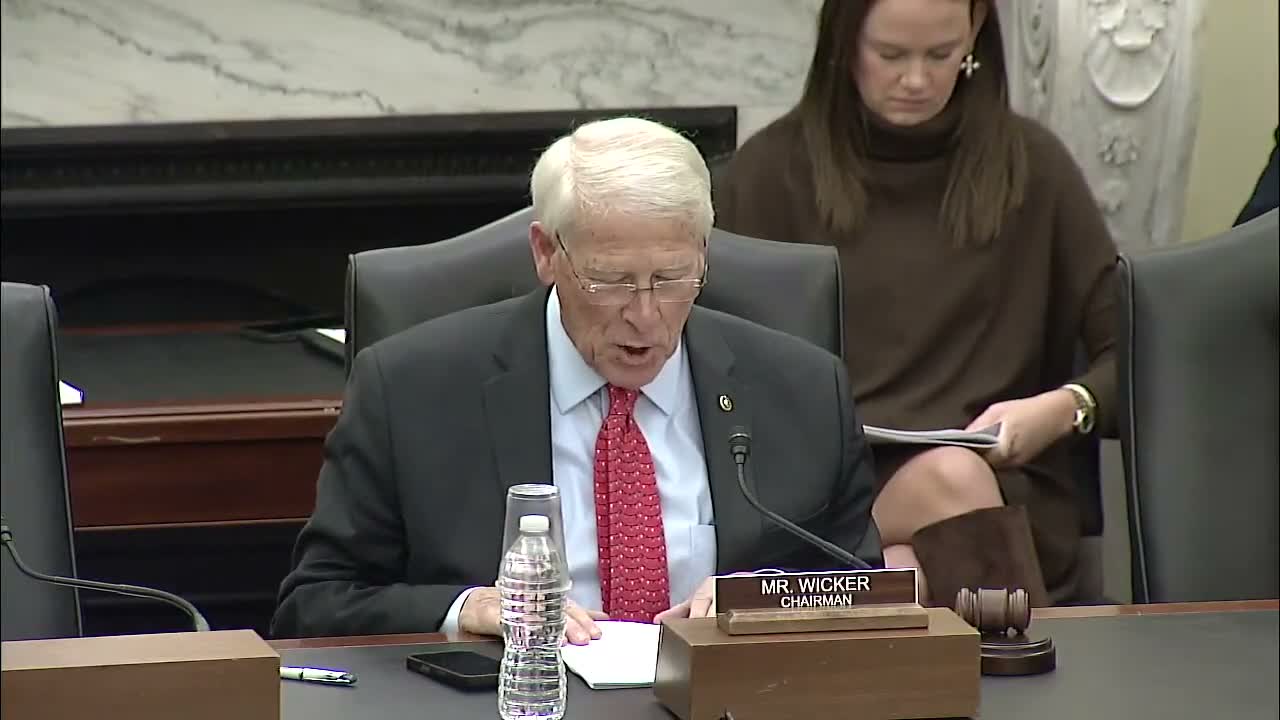
Summary
At a Commission on Security and Cooperation in Europe hearing marking the 30th anniversary of the Dayton Accords, experts said Dayton secured peace but enshrined ethnic divisions, leaving Bosnia mired in corruption, political paralysis and vulnerable to outside influence; witnesses urged EU-led reform and targeted U.S. support.
The Commission on Security and Cooperation in Europe convened a hearing marking the 30th anniversary of the Dayton Peace Accords, where lawmakers and three outside experts agreed the 1995 agreement ended large-scale violence but left Bosnia and Herzegovina with institutional constraints that now hinder democratic development.
"Thirty years without a significant breakdown in security is a remarkable accomplishment," the commission chair said, opening the session with a summary of Dayton’s achievements and its worst atrocities, including the Srebrenica genocide in July 1995, when roughly 8,000 Bosniak men and boys were killed. The chair and witnesses placed the accord’s success in ending the war alongside warnings that its constitutional arrangements have calcified ethnic political divisions.
Dr. Christopher Chivvis of the Carnegie Endowment argued that Dayton was an extraordinary diplomatic achievement that bought peace, but that the United States now faces different geopolitical limits and should support a pragmatic, European-led strategy for the region. "We shouldn't compare the imperfect reality of an EU lead in the Balkans to a fantasy in which America returns to the region in full force," Chivvis said, urging coordination with EU partners and targeted use of U.S. tools.
Ambassador Clint Williamson, who described his role as presiding arbiter in the Brčko arbitral regime created under Dayton, said the arbitration and the U.S.-led supervisory role produced one of Bosnia’s few stable multiethnic localities. Williamson described Brčko District as home to about 80,000 people, with Brčko city around 40,000, noting that "children attend the same schools" there and local leaders of different ethnicities work together — a condition he attributed largely to long-running U.S. diplomatic and supervisory engagement.
Yet witnesses said those pockets of stability coexist with endemic corruption, patronage, and political stalemate at the national level. "The structure lends itself to corruption," said Dr. Paul Williams, who served as pro bono counsel for the Bosnian delegation at Dayton; he added that institutional features such as ethnic vetoes and rotating presidencies make meaningful reform difficult and slow. Speakers flagged a population decline from roughly 4,000,000 in 2000 to under 3,000,000 today as evidence of economic and governance malaise.
Several witnesses and members of the commission also singled out Milorad Dodik and elements in Republika Srpska as significant secessionist risks, and described continuing Russian and Belgrade influence. Williamson said pressure from the United States and other governments helped remove Dodik from office this year but cautioned that the broader Russian effort to exploit divisions remains "very real."
Lawmakers and witnesses discussed recent U.S. legislation: the chair said he joined Sen. Jeanne Shaheen in introducing the Western Balkans Democracy and Prosperity Act, and that the measure had been included in the FY2026 National Defense Authorization Act passed by the Senate. Witnesses urged sustained U.S. support for institutions — diplomatic engagement, rule-of-law assistance, and tools such as the Development Finance Corporation — to offer local leaders alternatives to Russian and Chinese financing.
Why it matters: witnesses said Dayton prevented renewed mass killing and stabilized the region but created a constitutional design that is ill-suited to long-term democratic governance. As Bosnia’s leaders and international partners debate reform, the choice will be between incremental fixes that preserve Dayton’s security framework and deeper constitutional change that many say would be needed to create a genuinely multiethnic state.
The commission heard no formal votes and took no binding action. The chair closed by thanking the witnesses and adjourning the session.