
Regional partners present framework to reconvey Columbia River shoreline to local control; draft tribal protections included
Get AI-powered insights, summaries, and transcripts
Subscribe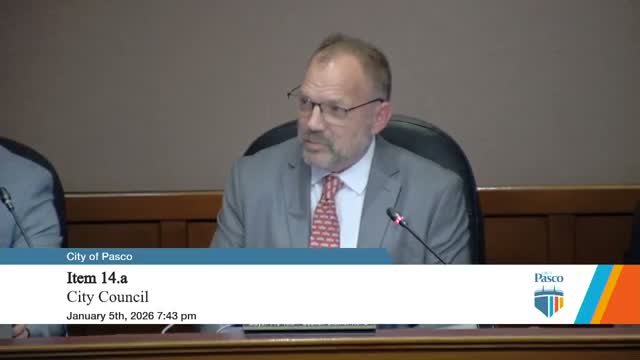
Summary
Tri-City Development Council representatives briefed Pasco on a multi-jurisdiction effort to transfer Corps-managed shoreline land to local governments, describing draft agreements (MOA, cultural-practices easement, disturbance protocols), an estimated collective maintenance cost of about $2 million annually, and a congressional strategy with tribal partnership.
Representatives from the Tri-City Development Council briefed the Pasco City Council on a multi-year effort to reconvey Columbia River shoreline lands now owned by the U.S. Army Corps of Engineers to local governments and tribal partners.
Carl Dye and David Replog described the historical context: large federal acquisitions after mid-20th-century floods left much shoreline under Corps ownership, even where local governments had been maintaining parks and recreation areas. The working group — including local governments and tribal nations — has drafted three governing documents intended to govern transfers and protections: a memorandum of agreement to formalize partnership, a cultural-practices easement to ensure continued access for tribal cultural activities, and protocols for handling ground‑disturbing work that may uncover Native American artifacts.
Replog said the local governments collectively spend about $2 million a year maintaining federally owned shoreline lands and argued reconveyance would reduce bureaucratic delay associated with Corps processes. He said congressional sponsorship has been sought from Rep. Newhouse and briefings have occurred with the offices of Senators Cantwell and Murray and Rep. Adam Smith; one possible legislative vehicle discussed is the National Defense Authorization Act. Replog emphasized the effort is being pursued in stages to avoid requiring full federal NEPA and other federal regulatory processes up front for every parcel.
During council questions, members asked about maintenance costs if Pasco were to receive roughly 300 acres, whether the drafted documents would limit future local land‑use decisions (sales or conveyances), and how tribal treaty rights would be protected. Presenters said the draft documents do not currently prohibit local governments from selling land in the future but noted final legislation will determine specific constraints; they emphasized guardrails, tribal coordination, and planned public outreach before documents are finalized for council review.
Presenters said the working group expects to share near-final drafts with councils and commissions in the coming weeks and continue public outreach; staff indicated any change in ownership would still be subject to local legislative action and public processes.
Council members and presenters framed the reconveyance as aimed at improving local stewardship, public recreation, and honoring tribal connections to the river, rather than enabling dense private development without local approvals.