Get Full Government Meeting Transcripts, Videos, & Alerts Forever!
Get email alerts on the Personnel Policy topic
No spam. Unsubscribe anytime.
Mill Valley approves eight-week paid parental leave for city employees
Summary
The Mill Valley City Council authorized a paid parental leave policy offering 320 hours (eight weeks) of paid leave to eligible city employees, to run concurrently with FMLA/CFRA protections; council asked staff to monitor costs and return with follow-up data after implementation.
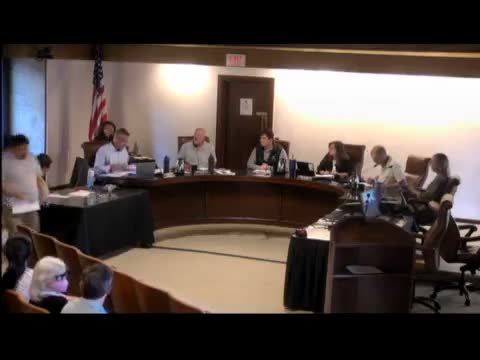
The Mill Valley City Council on June 16 authorized the city manager to finalize and implement a paid parental leave policy that provides eligible employees 320 hours — eight weeks — of paid leave for the arrival of a new child.
City administrative intern Audrey Portillo introduced the proposal on behalf of staff, saying the benefit would run concurrently with existing job-protected leaves under FMLA and CFRA and would apply to full‑time and part‑time benefited employees. "Today's proposal recommends providing 320 hours or eight weeks of paid parental leave to eligible city employees to support the arrival of a new child," Portillo said.
Council members pressed staff on eligibility and fiscal effects. Members asked whether other employees could donate leave to extend the benefit, how the city would treat employees with less than 12 months' service, and whether the County of Marin had a comparable paid policy (staff said the county directs employees to state unpaid protections). Staff said the eight‑week benefit is a conservative starting point and can be combined with accrued vacation or other leave the employee has available, and that a catastrophic leave bank and onboarding clarifications were being considered to address special cases.
Council members also asked about the program’s cost and operational impacts. Staff said direct costs were uncertain without detailed modeling and that some departments — especially police — could face overtime pressures if multiple employees take leave concurrently; other departments could cover absences with contractors or internal reassignments. Proponents argued the policy should reduce turnover and recruiting costs over time.
After discussion the council voted to authorize the city manager to finalize and execute the policy. The motion was seconded and approved by voice vote; the mayor announced the vote was unanimous.
The city will implement the policy administratively and staff agreed to report back on early outcomes and any recommended adjustments, including whether to expand leave through donated time or changes to related leave policies.
The council’s action makes Mill Valley one of the municipalities in the region adopting a defined paid parental‑leave benefit for city employees; staff cited Petaluma and San Jose as comparators that offer similar 320‑hour minimums. The measure does not alter state protections under FMLA/CFRA and was presented as a personnel policy rather than a change in statute.