Get Full Government Meeting Transcripts, Videos, & Alerts Forever!
Get email alerts on the Public Works topic
No spam. Unsubscribe anytime.
Mill Valley's PCI reaches 79; consultants recommend $3M/year minimum to maintain condition, $5.5M optimal to eliminate backlog
Summary
Pavement consultants reported a systemwide pavement condition index (PCI) of 79 and recommended a five-year strategy of critical-point management: at least $3M/year to hold PCI near 80, $5.5M/year to clear backlog over five years; council discussed funding risks if MST funding lapses and neighborhood requests to prioritize specific loops.
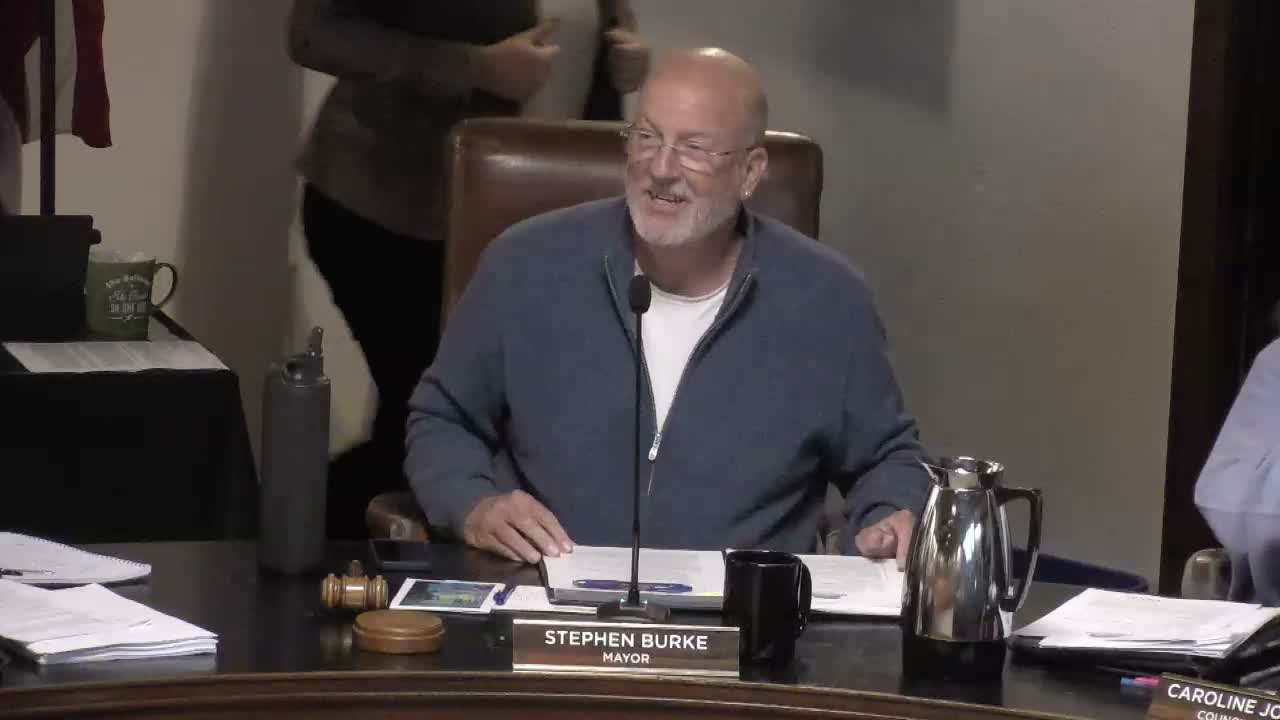
Public works staff and consultant Pavement Engineering, Inc. presented the city's five-year pavement management plan and funding scenarios. Consultant Joe Ryrie said Mill Valley now manages about 61 centerline miles (roughly 7 million square feet) of pavement and reported a systemwide PCI of 79 after recent projects. "Your system average right now is a 79," Ryrie said, noting the city's PCI rose from 64 in 2016 to 79 in 2025.
The consultants explained preservation principles: treat the right pavement with the right method at the right time to avoid costly reconstruction. They modeled options and estimated today's backlog of needed work at about $9.3 million and an unconstrained need (to immediately eliminate backlog) at roughly $11.8 million for the first year. Under current projected revenues (including the city's MST funding), spending about $3 million per year would hold the PCI near 80; $5.5 million per year would be the optimal level to eliminate the backlog within five years. Ryrie warned that if MST revenues are not renewed, backlog could increase sharply and PCI would begin to fall.
Council and residents pressed for neighborhood considerations. Resident Paula Reynolds asked that the Eldridge/Woodbine/Greenwood/Upland neighborhood loop be prioritized; staff said the loop is on the list and that community cost-share or piggybacking could be considered if neighbors want to accelerate work in tandem with city projects. Staff also noted emerging pressures on pavement funding (unfunded mandates for ADA ramp upgrades and new stormwater requirements tied to certain treatments) and that heavier vehicles, including some EV classes and large maintenance trucks, increase pavement loading and shorten design life.
Council did not take an ordinance-level action but directed staff to include pavement funding options in upcoming budget discussions, keep neighborhood priorities in scheduling, and continue outreach on potential cost-sharing options.