Get Full Government Meeting Transcripts, Videos, & Alerts Forever!
Get email alerts on the Sea Level Rise topic
No spam. Unsubscribe anytime.
Mill Valley council authorizes city manager to award shoreline-adaptation contract to WRT
Summary
After a technical presentation and extended council questions about scope, partners and funding, the Mill Valley City Council voted to authorize the city manager to award an 18-month sea-level-rise shoreline adaptation contract to WRT, with staff saying the grant-funded phase will focus on vulnerability assessment and adaptation strategy development.
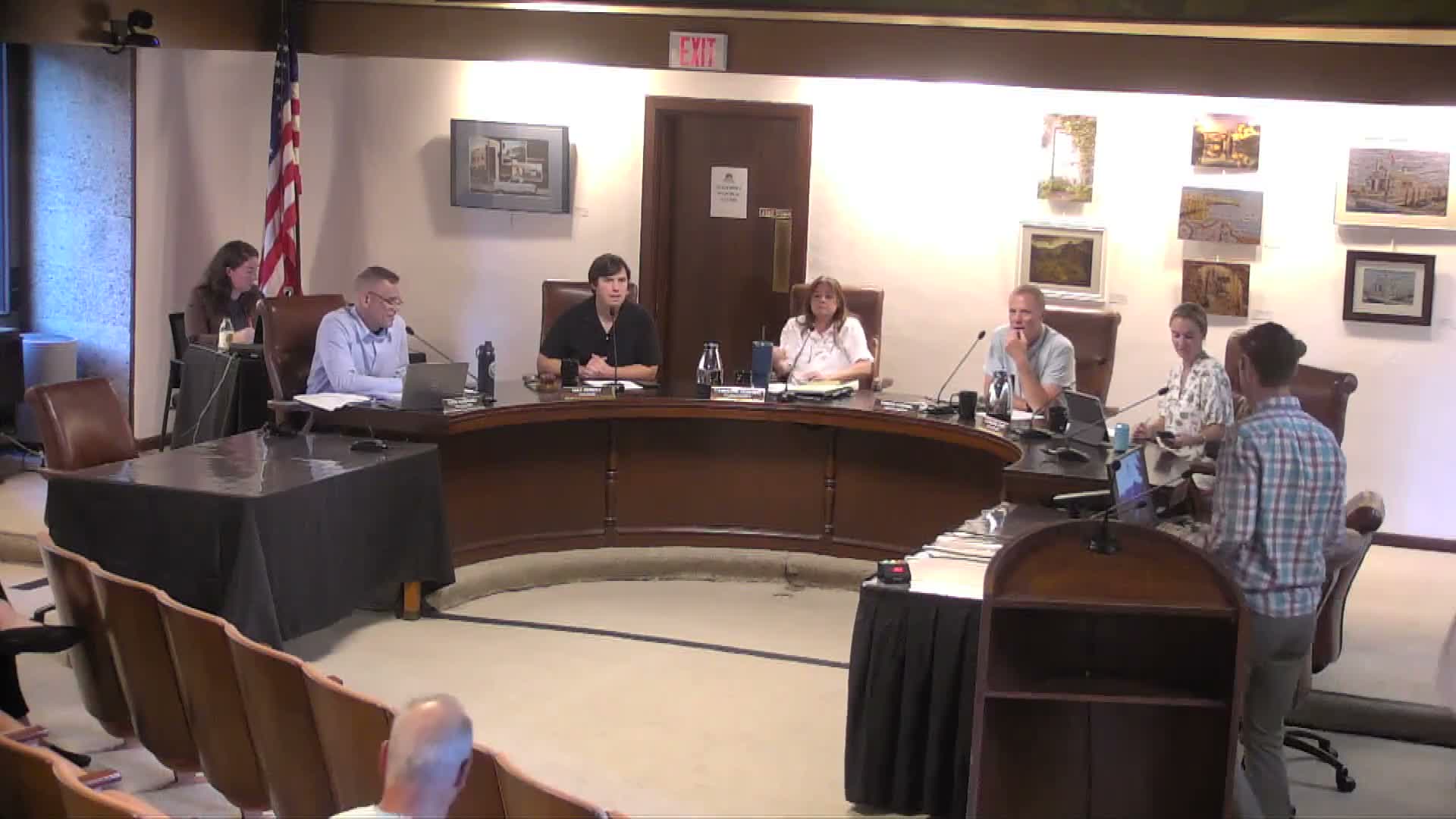
Mill Valleys City Council voted Aug. 18 to authorize the city manager to award a contract to the consultant team led by WRT to develop a shoreline adaptation plan focused on sea-level rise.
The unanimous resolution, moved by Council Member (Speaker 3) and seconded by Council Member (Speaker 6), follows staff presentations that said the project is funded principally by an Ocean Protection Council (OPC) grant and will follow Bay Conservation and Development Commission (BCDC) RSAP guidelines for elements AD (vulnerability assessment and an adaptation framework). Deputy Director of Public Works Jared Berrio introduced the proposal and project manager Mari Swim said the first phase is designed as an 18-month, community-driven effort that will refine local vulnerabilities and develop adaptation strategy options.
"This project is really just meant to be conceptual at this stage," Swim said, describing a schedule that includes early outreach, community workshops, focus groups, and an ad-hoc working group to guide the work. Swim told council that the team expects to begin detailed adaptation-strategy work around month six of the contract and to return policy-level options to council for later consideration.
John Gibbs, principal of WRT, said the consultants would combine rigorous technical analysis with an inclusive outreach process. "We're going to do our best to facilitate those conversations with rigorous technical work, but in ways that people can understand," Gibbs said.
Councilmembers pressed staff on why the city needed another vulnerability assessment when regional studies exist, on the plans ability to produce fundable projects and designs, and on funding beyond the first phase. Council Member (Speaker 2) said the council wanted to move from vulnerability documentation quickly to concrete strategy and implementation planning; staff replied that BCDC requirements and community engagement steps necessitate the phased approach and that the first phase is intended to build a defensible pathway to fundable projects.
Staff and consultants said phase 1 is estimated to consume a substantial portion of available grant funds (staff referenced roughly "just under $700,000" for phase 1 and discussed an overall funding pool that had been described in the meeting as about $1.2 million when combined with other sources). Swim said phase 2 (elements E and F in the BCDC framework, with G optional) could follow and that the city would pursue additional state or federal funding and political leverage as projects become defined.
Councilmembers also discussed coordination needs with external agencies such as Caltrans, the sewer agency (SASM), county parks, and TAM to ensure the Mill Valley plan aligns with adjacent infrastructure projects and regional adaptation efforts. Swim said the team is already communicating with several of those partners and expects to integrate their input as the work proceeds.
By authorizing the city manager to execute the contract upon final scope agreement, the council cleared the path for the city to begin formal project kickoff, issue required notices to BCDC, and start robust community engagement. Staff said the next steps are finalizing the scope and contract, posting applications for the working group, and beginning outreach events and technical assessments that will inform council decisions about which adaptation strategies to pursue and when to seek implementation funding.
The resolution passed with council direction to prioritize actionability and to seek funding opportunities as the plan progresses.