
Advisory committee urges temporary sanctioned outdoor space; council asks for costs and task-force planning
Get AI-powered insights, summaries, and transcripts
Subscribe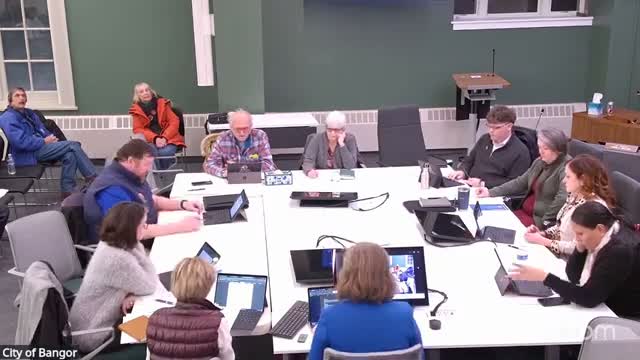
Summary
The city's Racial Equity, Inclusion and Human Rights advisory committee proposed a temporary sanctioned outdoor space (SOS) as a harm-reduction resource hub for people experiencing homelessness. Councilors praised the goals but requested written cost estimates, clarity on governance and recommended a task force/consultant before council action.
Representatives of the Racial Equity, Inclusion and Human Rights advisory committee presented a proposal asking the council to direct the city manager to establish a temporary sanctioned outdoor space (SOS) to provide running water, charging, hygiene services and harm-reduction supports for unsheltered residents.
The advisory representative said the SOS is intended as a temporary, centrally located resource hub to reduce repetitive cleanups and improve health outcomes: “This proposal … creates a safe outdoor space that could centralize all of the resources for folks that are unhoused, so that we're not scattering police responses, emergency medical calls, public cleanup over and over and over again.” Presenters emphasized the proposal is not a permanent shelter replacement but a short-term operational model to be paired with a task force working toward longer-term housing solutions.
Councilors raised repeated questions about scope, cost and liability. Multiple members asked the advisory committee and staff to provide a menu of service options with associated prices; the advisory representatives said costs depend on chosen service levels and offered to supply written cost estimates. One councilor noted the city had spent roughly $120,000 on responses in June (as cited by the advisory presenters) and asked staff to compare current spending on encampment responses to projected SOS costs.
The proposed model prompted debate over public-safety and harm-reduction policies. A councilor asked whether the SOS would allow substance use; the advisory representative replied that a harm-reduction approach allows peers and staff who are familiar with overdoses to intervene and that such an approach can save lives. That exchange highlighted a split between councilors who view the proposal as a pragmatic harm-reduction strategy and those who are concerned about perceived condonation of drug use in a city-managed or sanctioned space.
Councilors also discussed governance: whether the city should 'own' and operate the site or partner with nonprofits and whether the city manager should be directed to coordinate operations. Several members recommended a deliberate planning step—forming either a standing committee or a task force, hiring a national consultant, and creating a homeless-coordinator role—to define operational responsibility, liability, funding and site logistics before moving any council directive.
By the end of the discussion the committee agreed to 'put a pin' in the advisory committee's recommendation and directed that the topic be taken up by staff/committee work, with council members expecting written cost comparisons and a set of site/partner options to inform future decisions.
No formal vote or directive to the city manager was adopted during the meeting.