
Board instructs staff to revisit countywide ban on digital signs, seek narrow exceptions
Get AI-powered insights, summaries, and transcripts
Subscribe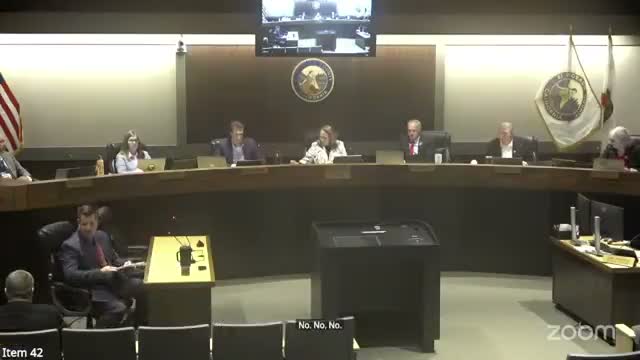
Summary
After hearing that the 2025 sign ordinance's digital-sign ban unintentionally blocked desired directory and community event displays, the Board directed staff to draft a resolution of intention to amend the zoning chapter with targeted exceptions and objective permitting criteria.
PLACERVILLE, Calif. — The Board of Supervisors directed staff to prepare a resolution of intention (ROI) to revisit the county’s 2025 sign ordinance provisions that largely banned digital signage, an action prompted by community feedback that the earlier text was overbroad.
Background: The county adopted sign-ordinance amendments in September 2025 that generally prohibited digital signs except in narrowly specified circumstances. Since adoption, developers and property managers in El Dorado Hills and other commercial centers said the ban inadvertently removed useful, low-impact displays (tenant directories and architecturally compatible event panels).
What staff asked: Long Range Planning asked whether the Board wants to keep the ban, add narrow exemptions, or allow case-by-case approval under a discretionary uniform sign program. Staff outlined several guardrails for reopening the code, including message-change frequency, automated brightness control keyed to ambient light, restrictions on visibility from US Highway 50, size/height limits, and requiring discretionary review (uniform sign program) for non-exempt digital signs.
Board reaction: Supervisors broadly supported revisiting the ban but emphasized the need for objective limits to avoid uncontrolled proliferation or driver distraction. Several supervisors suggested limiting exceptions by location (commercial centers with no nearby residences), by size, or by permitting a directory-only exception that is not visible from public roadways. County Counsel reminded the Board that content cannot be regulated under the First Amendment, so the code must rely on time, place and manner objectives (brightness, message-change frequency, placement).
Outcome: The Board voted unanimously to direct staff to prepare an ROI to amend chapter 130.36 of the zoning ordinance with targeted exceptions and objective permitting standards, and to return with draft language and recommended guardrails for Board consideration.
Why it matters: The change seeks to balance local business and community needs (improved wayfinding and event notification) against visual character and traffic-safety concerns; staff will outline permitting options that preserve constitutionally permissible, content-neutral limits.
Next steps: Staff will draft ordinance language for Board review, including objective criteria for a uniform sign program and likely brightness/time controls; public input will be solicited during the formal amendment process.