
NDOT proposes four speed cushions, radar signs for Mulberry Downs; owner-only ballot to decide short-term measures
Get AI-powered insights, summaries, and transcripts
Subscribe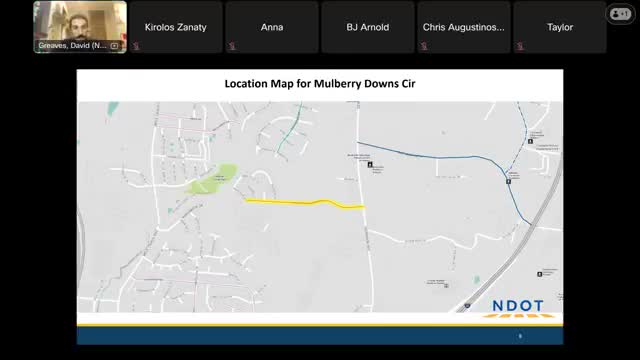
Summary
NDOT staff presented a revised traffic-calming plan for Mulberry Downs Circle on Oct. 28, 2025 — four speed cushions and two radar-feedback signs — and said the short-term package will be decided by an owner-only ballot requiring two-thirds of respondents to approve.
NDOT staff presented a revised traffic-calming plan for Mulberry Downs Circle at a virtual meeting Oct. 28, outlining a short-term package of four speed-cushion sets and two radar-feedback signs and describing a separate, later bikeway-improvement concept that would wait until repaving.
David Greaves, who facilitated the meeting, said the traffic-calming program prioritizes engineering measures to lower vehicle speeds on residential streets and noted the program’s “3 E’s” are education, enforcement and engineering. He cited prior project data showing average speeds falling from 31 to 22 mph after cushions and said cushions are intended to reduce the high speeds measured on Mulberry Downs.
Greaves said the short-term package that will be the subject of an online ballot includes four sets of modular rubber speed cushions and two radar-feedback signs. If the ballot reaches the approval threshold — two-thirds (66%) of those who return votes — the traffic-calming elements in the plans (the four cushions and two radar signs) move forward. “A successful ballot is when two thirds of those who vote, vote yes,” Greaves said.
Greaves described placement constraints used in the design: cushions are concentrated in the flatter, more residential portion of the street where bike lanes and bus movements can be protected, while steeper and curvier stretches will receive radar-feedback signs rather than cushions. He said the design was revised from five cushions to four after resident feedback and explained that traffic circles were rejected because they would degrade existing bike facilities.
NDOT will post the plans online, assemble an up-to-date list of parcel owners from Metro property records, mail ballots with unique codes to owners, and open a six-week online voting window. Greaves said mailers will include a unique ID that owners use to submit a single online ballot per parcel; owners of rental property (not renters) receive the ballots. He estimated the ballot list for the condo/townhome parcels could be “somewhere between 50 and 100” but said he did not have an exact count at the meeting.
Greaves emphasized that if the cushion ballot fails, NDOT will not abandon safety measures: a plan B will be offered that would likely exclude vertical cushions but could include radar-feedback signs and additional striping. He also said cushions are owned and maintained by Metro and are bolted rubber devices intended as permanent, durable installations.
Anna Dearman, who identified herself late in the meeting, urged neighbors to keep in mind NDOT applies the same standards countywide and thanked staff: “I really applaud David and his team for coming up with this design, for trying their very best to respond to the community.”
Next steps: NDOT expects to compile the parcel-owner list and mail ballots within roughly two weeks of the meeting and open a six-week voting period; the outcome of that vote will determine whether the short-term cushion-and-radar package proceeds or whether NDOT implements an alternate plan.