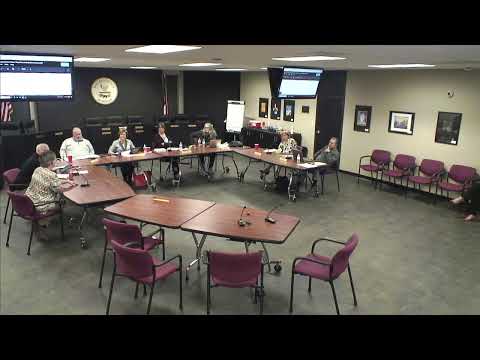
Moore County officials outline K‑12 social‑emotional learning program; some board members request deeper review
Loading...
Summary
District staff presented the countywide SEL strategy—competencies, classroom practices and measurement plans—and board members asked for measures, parent reporting and source materials; one member read a lengthy critique requesting origin legislation, teacher orientation materials and evaluative data.
District staff presented an overview of social‑emotional learning (SEL) programming across Moore County Schools, describing five core competencies (self‑awareness, self‑management, social awareness, relationship skills and responsible decision making), monthly character education, goal‑setting artifacts and classroom practices such as zones of regulation and student‑led conferencing.
Miss Simon said SEL supports academic outcomes, engagement and resilience, and highlighted examples ranging from kindergarten self‑regulation activities to high‑school engineering‑design projects that teach persistence and collaborative problem solving. ‘‘It’s really about how we teach students to understand and manage their emotions,’’ Simon said when introducing the presentation.
Board members asked how the district measures SEL outcomes and how parents are informed. Tina Evans and other staff said measurement is multi‑part: the district looks at behavior incident data, academic outcomes, goal‑setting artifacts and school‑level Tier‑1 behavior metrics; principals are being asked to report results and to aim for a high percentage of students meeting behavioral expectations.
One board member read a prepared critique of state‑mandated SEL and requested that the board receive all originating legislation, DPI guidance, teacher orientation materials, any formal tests used to measure SEL and the district’s use (or not) of CASEL resources. The member warned of potential long‑term consequences and asked for transparency about the state’s evidence base; staff said they would compile the requested materials.
District leaders said SEL programming is intended to be developmentally appropriate, to be largely transparent to families via school communications and to be strengthened by observational and behavioral measures rather than by stand‑alone psychological tests.