
Portsmouth commission votes to recommend folding parking-enforcement personnel into police department
Get AI-powered insights, summaries, and transcripts
Subscribe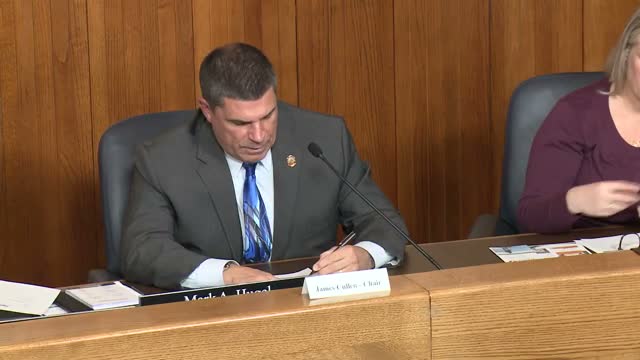
Summary
The Crime & Gun Violence Prevention Commission voted by voice to recommend that city council and the city manager transfer parking-enforcement personnel and functions to the police department for training and accountability; the recommendation is advisory and will be submitted in memo form, staff said.
The Portsmouth Crime & Gun Violence Prevention Commission voted on Jan. 5 to recommend that the city transfer limited parking-enforcement functions—and the personnel who perform them—to the police department, saying the change would increase visible uniformed presence in neighborhoods identified in the city's crime-reduction plan.
The chair moved that the commission "recommend to the city council and the city manager that the parking-enforcement functions that are currently being carried out by the parking authority in a limited section of the city... be turned over to the police department and folded into [the department], trained by the police department," and a commissioner seconded the motion. The motion passed on a voice vote; no roll-call tally was recorded in the meeting minutes.
Chief Jenkins told the commission that many residential parking problems involve street parking rather than private-property lots; he warned that private-property complexes are generally not enforced by the department. "Those complexes are generally private property... because they're private property, we generally don't enforce anything on private property," Chief Jenkins said, adding that additional personnel could provide "eyes and ears on the street" and assist with education and enforcement of street-parking rules.
Commissioners raised concerns that turning enforcement to police oversight might increase towing or enforcement into private apartment complexes; Chief Jenkins reiterated the department's usual limits and described the typical appearance and role of parking-enforcement personnel—uniformed security-style staff who wear light blue shirts and display badges and drive distinguishable vehicles linked to the city.
Chair said the commission's recommendation is advisory and asked staff to determine the format for the submission (memo or signed statement). The commission did not specify a timeline for council consideration at the meeting.