Board hears special‑education disproportionality review; district reports stabilization across measures
Summary
District special‑education staff reported a multi‑year review of identification and discipline ratios, noting a temporary spike in prior years and current stabilization; staff said interventions and monitoring are in place and that the district remains within IDEA and state equity expectations.
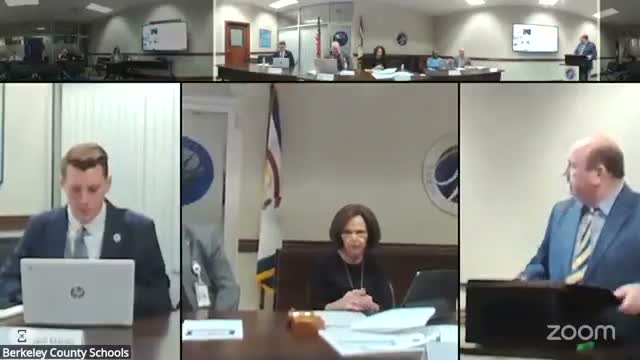
The Berkeley County Board received a special‑education equity update Tuesday that examined three‑year trends in referral, identification and disciplinary outcomes and described district interventions to reduce disproportionality.
Speaker 13, who presented the CCEIS (Comprehensive, Coordinated, Early Intervening Services) analysis, said the district tracks risk ratios over several years and flagged a prior year with an elevated risk factor (about 3.79) driven in part by small cell sizes. The presenter emphasized the multi‑year nature of the review and said the current 24–25 school‑year figures show greater stability.
The report covered identification categories, placement and discipline measures (ISS and OSS) and noted the district’s process for monthly special‑education administration meetings to ensure consistent implementation of policies and data reporting. The presenter tied improvements to early‑intervention programs — including focus classrooms, BCBAs, RBTs and the Cares Academy — and to stronger data collection through the district’s reporting systems.
Board members asked whether data included students placed out of state and raised questions about small‑cell reporting, particularly in categories such as emotional disturbance where low counts can obscure trends. The special‑education presenter said the system extracts data from IEPs and WHEMIS/Revus and that cell‑size rules can make some subgroup analyses inconclusive.
Why it matters: Federal IDEA obligations and state equity requirements require districts to monitor identification and disciplinary outcomes for disparities. The board’s review underscored processes the district is using to meet those obligations and to respond to prior anomalies in the data.
Next steps: staff will continue monthly reviews, refine processes for pre‑K identification, and report further on any follow‑up monitoring or corrective actions.