
Berkeley County Schools begins K–5 'Magnetic Literacy' rollout, expands coaching and curriculum supports
Get AI-powered insights, summaries, and transcripts
Subscribe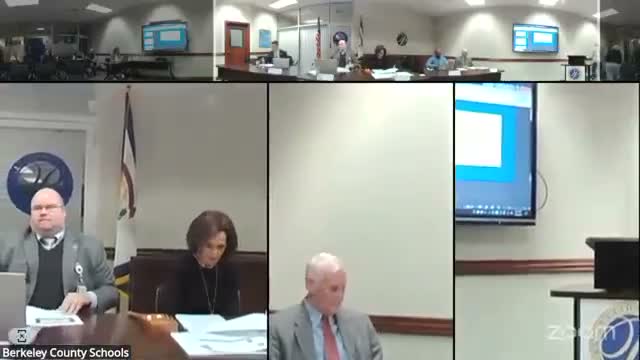
Summary
Superintendent announced districtwide introduction of 'Magnetic Literacy' for K–5 and described embedded daily support from Curriculum Associates plus expanded coaching cycles, PLCs and walkthroughs to align instruction with the science of reading and improve student vocabulary and comprehension.
The Berkeley County Board of Education heard a districtwide instructional update Tuesday as leaders described the start of a K–5 literacy curriculum rollout and a scaled program of in‑school coaching and professional development.
Superintendent (name not stated) told the board the district "officially began the rollout of Magnetic Literacy as our tier 1 literacy resource for K–5" and said the transition included two‑hour training sessions and ongoing daily implementation support from Curriculum Associates and assigned academic specialists.
The announcement followed a presentation by Dr. Woods and a team of academic specialists who outlined five high‑impact instructional practices the district is pushing to improve instruction and comprehension. Dr. Woods described the priorities as a mix of ensuring access to aligned curriculum, developing performance‑based instructional objectives, explicit vocabulary work, student independence strategies and measurable classroom outcomes.
Academic specialists gave concrete examples of in‑school work: co‑teaching, PLC facilitation, modeling lessons, one‑on‑one coaching, and targeted small‑group interventions. Patty Pannell, the K–2 math and science specialist, told the board she moves "directly into classrooms to support implementation" so new strategies translate into student‑centered instruction. Rachel Yates, the grades 3–5 math and science specialist, described using data to plan instruction and said she has modeled lessons and co‑taught in classrooms to build teacher capacity.
Several principals and board members asked about teacher workload and the frequency of walkthroughs. One principal said administrators have a guideline of roughly 10 walkthroughs per administrator per week but noted flexibility where assemblies or other duties make that difficult. Board members pressed whether the program would overburden staff at smaller schools; presenters said supervisors allow flexibility and that the emphasis is coaching rather than evaluative observation.
Presenters also addressed prior rollout issues with StudySync, a secondary ELA resource. An academic specialist said StudySync’s 2021 rollout had gaps and staff spent extensive time retraining teachers to use the platform efficiently in Schoology so it could reduce planning time rather than add to it.
Why it matters: district leaders said Magnetic Literacy and the instructional supports aim to close gaps in vocabulary and comprehension that have hindered reading outcomes. Superintendent remarks framed the changes as intentionally planned and supported by daily coaching, external partners and ongoing professional learning.
Next steps: the district will continue implementation training, analyze midyear data to identify needed midyear pivots in schools, and present a budget preview at a board work session scheduled for Jan. 14.