
Council keeps historic-preservation program voluntary, directs outreach and code cleanup
Get AI-powered insights, summaries, and transcripts
Subscribe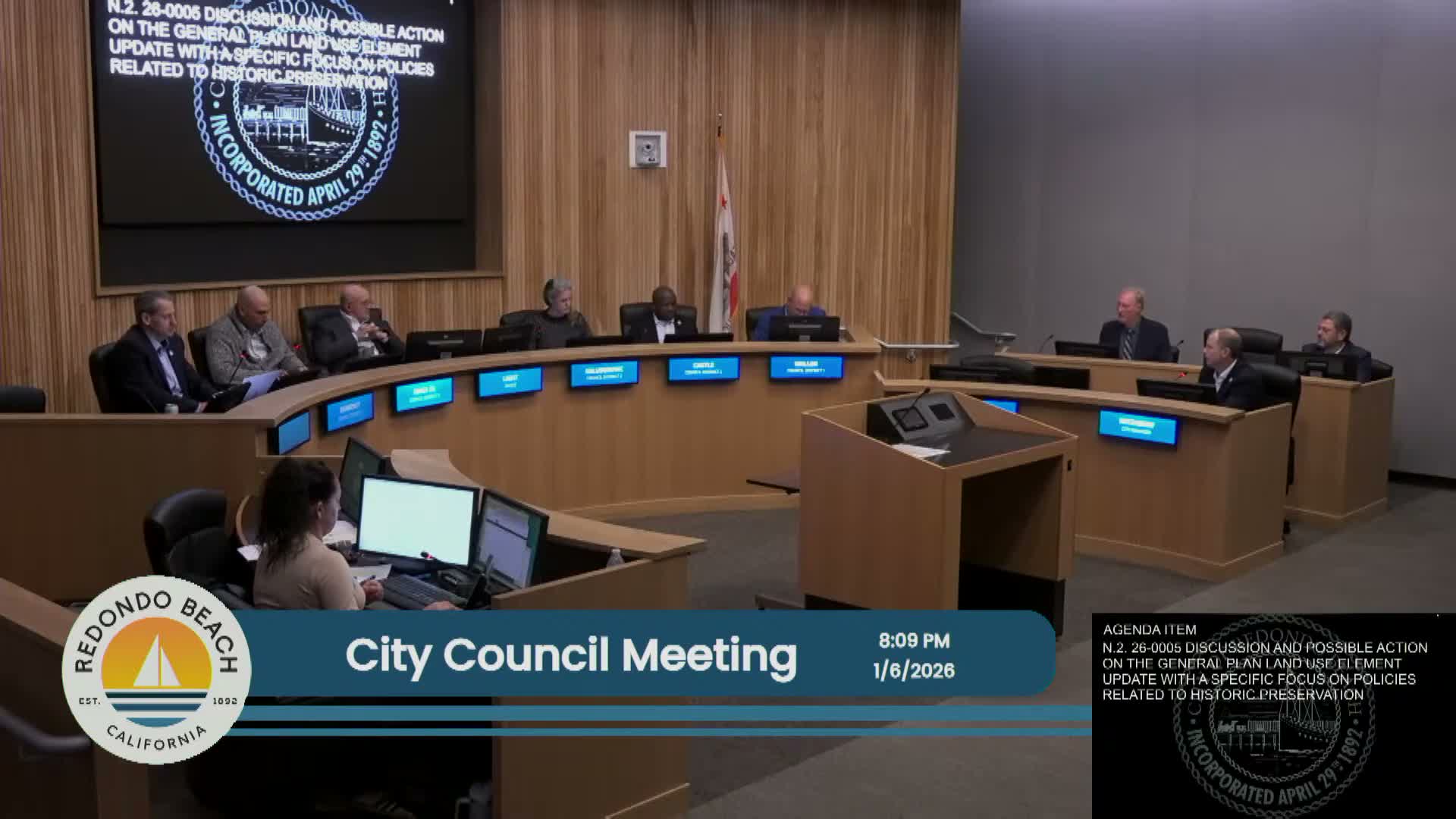
Summary
Following public comment and staff briefing, the council directed staff to keep the city's historic-preservation program voluntary, pursue enhanced outreach and education (including web resources and owner notification), and prepare code cleanup so an outdated survey is not treated as mandatory; staff will return with options for an updated survey and interim data-gathering.
After a lengthy public discussion, Redondo Beach's council on Tuesday asked staff to maintain a voluntary approach to local landmark designation while stepping up outreach and cleaning up inconsistent code language related to a 30-year-old historic-resources survey.
Community Development staff explained that the municipal code currently references a resource-survey list compiled in the late 1980s–1990s and that treating that list as automatically "historic" creates legal and procedural inconsistencies because the original survey did not require owner consent and is now outdated. Staff told the council a full, contemporary survey could cost on the order of $100,000–$200,000 and would require significant outreach, so near-term options include targeted outreach to owners of older properties, improved web resources, encouragement of Mills Act enrollment, and incentives for historic-district formation.
Members of the public and historic-preservation advocates urged stronger protections and a mandatory approach; others and several councilmembers favored enhancing the voluntary program and building participation through outreach and incentives. Councilmember Barron moved — and a majority seconded — to receive and file the report, keep the voluntary program, direct staff to pursue expanded outreach and education (including website information, a referral list of contractors, and engagement with the Public Amenities Commission and its subcommittee), and prepare code cleanup language so the old survey will no longer impose mandatory requirements. The motion passed.
Staff said they will return with options for interim data-gathering, outreach cost estimates and a timeline for a full survey if the council later chooses to fund one.