Residents urge Lee County to impose moratorium as concerns grow over proposed fracking and AI data center
Loading...
Summary
Dozens of residents asked the Lee County Board of Commissioners to enact a temporary moratorium on fracking and any proposed on-site gas extraction to power a data center, citing groundwater risks, economic uncertainty in AI/data-center markets, and concerns about property rights and local health.
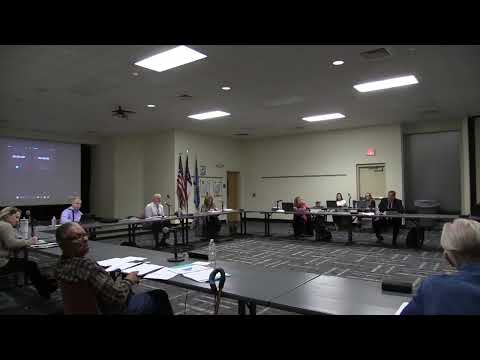
Dozens of residents urged the Lee County Board of Commissioners to adopt a temporary moratorium on fracking and any on-site gas extraction tied to a proposed AI data center, saying the county has time to study potential harms before an application arrives.
"If we are unable to pass a moratorium, at least make sure that they do all of the due diligence," said Matthew Clark, the first speaker in the public-comment period, arguing that an "AI bubble" and component shortages could make a large data-center investment risky and leave the county with little local benefit.
Residents at the meeting repeatedly raised water and health concerns. Sheila Sharrock, who said she relies on a private well in the Deep River area, told the board she could not afford the cost of switching to municipal water and fears contamination: "I have animals and children on that property. I don't need there'd be contamination in the soil where they're out playing and grazing." Emily Sutton, Haw Riverkeeper and executive director of the Haw River Assembly, urged a moratorium on fracking, arguing conventional drilling or fracking near the Deep River would "most certainly threaten groundwater supplies and the surface water supplies through that groundwater recharge."
Speakers also raised legal and property-rights issues. Keeley Porridge referenced state oil-and-gas rules and warned about forced pooling and the possibility that surface owners do not hold mineral rights, asking the commission to "help protect my rights." Steph Ganz of Clean Water for North Carolina told the board she was not aware of any completed county or state applications and offered to send a legal summary from the UNC School of Government about the authority to enact moratoria: "A moratorium is a temporary measure that allows the county to preserve the status quo while plans are made."
Speakers framed the potential impacts broadly: Kelsey McClain warned of the long-term economic damage that can follow a single major shock to a rural community; Tom Lee described local mining legacy and subsurface voids beneath parts of the Deep River watershed and said blasting had caused structural cracking in nearby foundations in the past.
County staff responded only within procedural limits during public comments. At least one staffer reiterated that, to their knowledge, no complete application had been filed with the county or the state oil-and-gas commission. The board did not take formal action on a moratorium at this meeting.
The meeting record includes repeated calls from residents for the commission to pause and study the environmental, economic and legal implications before any drilling or data-center application proceeds.