
Lincoln officials present omnibus parking ordinance with higher fines and new curb-management rules
Get AI-powered insights, summaries, and transcripts
Subscribe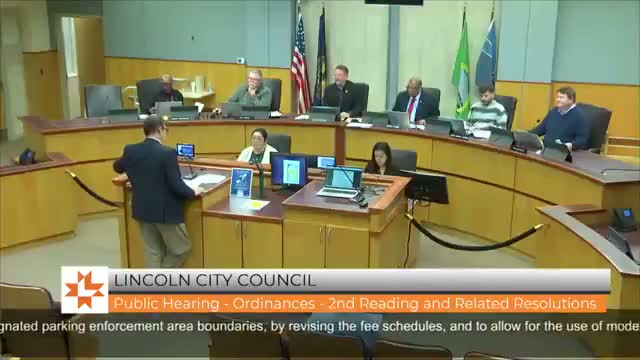
Summary
City planners proposed a broad parking ordinance revision to expand enforcement areas, modernize meter definitions, raise most fines (from $10 to $15 and up to $25 for loading zones), remove a $1 online-payment discount, and create flexible curb-management rules intended to support downtown activity.
The Lincoln City Council heard a comprehensive presentation on Jan. 5 proposing wide-ranging changes to the municipal parking code aimed at modernizing payment options and better managing curb space downtown.
Dan Marvin, Urban Development Director, described the package as an "omnibus parking ordinance" built from advisory board review and several months of updates. Marvin said the proposal expands map-based enforcement areas (including the North Bottoms and Innovation Campus), introduces long-term and short-term loading zones, and updates definitions so parking is no longer tied to individual meter posts. He told the council the city "will be able to free up LPD officers during football game day" by directing Park and Go staff to handle many enforcement and compliance tasks.
The proposal would raise the basic parking citation from $10 to $15 and increase loading-zone citations from $10 to $25. Marvin presented revenue and cost figures, saying Park and Go currently brings in about $1,300,000 in fine revenue against just under $2,000,000 in expenditures and that the $5 increase would reduce the net cost of operations (he estimated an implied operating gap reduction toward roughly $275,000). Marvin said the handicap citation would remain $100.
The package also would eliminate a longstanding $1 online-payment discount and increase the meter-bag hooding charge from $10 to $15. Marvin said the changes reflect both technological shifts — from pole-mounted meters to multispace meters and plate-recognition systems — and benchmarking against peer cities. "Madison, Wisconsin, they're at $25," Marvin noted, citing other cities' fines as context.
Council members pressed officials on implementation and outreach. One councilmember asked whether meters in College View were included; Marvin said that area is outside the current enforcement footprint but offered to follow up. Council members also asked about public education and how the city would notify residents and downtown businesses; Marvin pointed to Project O Street's outreach and said Project O Street text updates and other communications would be used. He added that Park and Go staff would perform many of the citations and that the city would continue to grant warnings or waivers for first-time offenders in some cases.
Marvin framed the changes as curb-management to optimize limited street real estate for short transactions, deliveries, rideshare/taxi loading, tour buses and special-event logistics rather than increasing total parking supply. He said the ordinance is intended to provide more options for downtown loading and to make enforcement and payment systems consistent with modern technology. The city did not take a vote on the ordinance at the Jan. 5 meeting; staff presentation and council questions were the main activity.
Next steps: the council will continue consideration of the ordinance during its public hearing process and will set any subsequent roll-call votes in future meetings.