Gilroy residents urge council to pause Amazon data center approval, cite water and safety concerns
Loading...
Summary
Multiple residents raised concerns about a planned 218,000 sq. ft. data center (reported approvals in November 2025), asking the council to halt further work, release water-use figures, require an independent environmental review and explain emergency response and groundwater impacts.
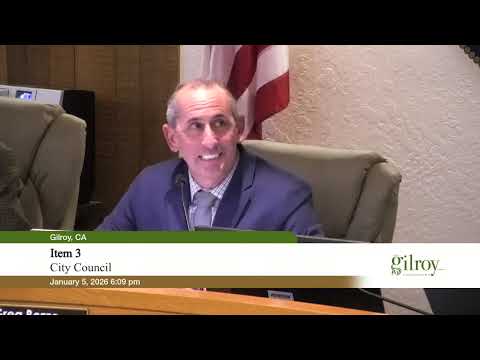
Several residents used the Jan. 5 public comment period to press the City of Gilroy for more information and to ask the council to halt or further review a data center project reported to have been administratively approved.
Cindy Smith drew a parallel to the widely publicized Hinkley contamination case and urged the council to "suspend the data center and conduct a current and independent environmental impact report," arguing the community’s drinking-water safety and long-term health should be prioritized. Bridal Smith (citing a Nov. 13 Gilroy Dispatch report) said the project plan and a 92-page architecture and site review permit outline a proposed 218,000-square-foot data center and asked for specific projected daily water use, groundwater impacts to the Yaga Subbasin and local emergency response arrangements. Bridal Smith said the city’s written DEIR response included no adjustment and asked the council to answer three specific questions at the Jan. 20 meeting.
Other speakers including Ruby, Dina Boscak and Trinity Foskett raised related concerns: that approvals occurred with limited public notice, that large data centers can draw substantial water (commenters cited figures such as up to 5,000,000 gallons per day for facilities of similar scale), and that onsite lithium-ion battery systems pose fire and air-quality risks based on recent regional incidents. Trinity, an illustrator, tied the issue to local livelihoods and expressed concern about AI and data-center impacts on arts and public health.
At the meeting, staff did not present a detailed technical rebuttal. Council members acknowledged the comments and said they would continue to work on related policy measures; no formal action on the data center occurred at the meeting.
Because many claims were offered by residents, the council and staff did not confirm technical figures or health findings during the hearing. The article reports those claims as public comment and identifies them as such; it does not treat the claims as established fact.