Kirkland Council Adopts Multi‑Part School Zone Safety Package: Beacons, Remote Connectivity, Crosswalk Signs
Loading...
Summary
The council approved staff recommendations for school speed signage (20 mph windows/always‑on), targeted flashing beacons on higher‑speed streets, citywide remote connectivity for beacon controls, in‑street crosswalk signs and gated crosswalk signage. One item (school zone stubs) passed 5‑2.
Kirkland’s City Council on Jan. 6 approved a multi‑option school zone safety package that sets consistent local standards for school speed limits, expands targeted flashing beacons, funds in‑street crosswalk signs, and adds remote connectivity for beacon controls.
Transportation staff presented seven optional safety enhancements. Key elements council approved include:
- Applying a 20 mph school speed limit “all the time” on local streets and a 7 a.m.–5 p.m. school‑day window on collectors where appropriate (Options B and C). Staff argued clearer time definitions improve compliance and enforcement.
- Installing flashing beacons in a targeted manner on principal and minor arterials and collectors that meet speed/volume thresholds (Option 2). Staff estimated about 30 new beacons and removal of 11 locations that do not meet thresholds; upfront cost roughly $330,000. Council approved the staff recommendation and asked staff to prepare an implementation plan.
- Requiring dual beacon heads as a longer‑term consistency measure for automated enforcement locations and considering expansion elsewhere as budgets and life‑cycle replacements allow.
- Approving citywide remote connectivity for beacons (Option 3) so staff can program and monitor beacon timing centrally, reducing enforcement and camera timing errors that have previously produced invalid tickets. Council approved citywide connectivity and asked staff to identify funding.
- Implementing in‑street flexible crosswalk signs and a modest annual replacement budget (staff recommended initial installation and $4,000/year for replacements funded from safety camera revenues). Council approved the recommendation.
- Installing gated signage (signs on both sides of crosswalks) at school crossings; council approved the staff recommendation.
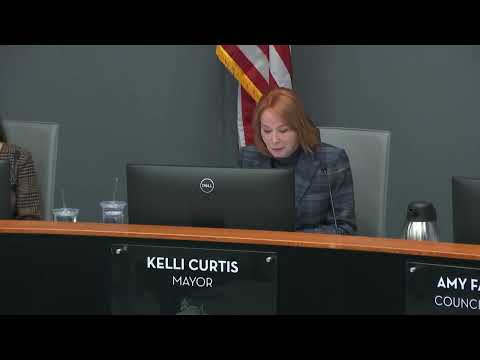
On the related question of school zone stubs (short perpendicular segments within 300 feet of a school that could be designated enforceable 20 mph school zones), the council adopted the staff Option 2 to add stubs where appropriate. That motion passed 5–2, with Deputy Mayor Jay Arnold and Mayor Kelly Curtis recorded as opposed.
Council members emphasized equity (Juanita concerns) and asked staff to produce an implementation plan that prioritizes arterial improvements, clarifies the number of collectors/local locations to be upgraded, and explains how automated enforcement revenues will be used for school‑safety projects. Staff will return with funding and phasing details.