Get Full Government Meeting Transcripts, Videos, & Alerts Forever!
Get email alerts on the Poverty Exemption topic
No spam. Unsubscribe anytime.
Petoskey council delays decision on 2026 poverty-exemption tiers, asks staff for comparables
Summary
Council debated whether to add tiered, partial property-tax exemptions for low-income homeowners, heard two options from the city manager and asked staff to compile comparables and fiscal estimates before acting; discussion was tabled to the Jan. 19 meeting.
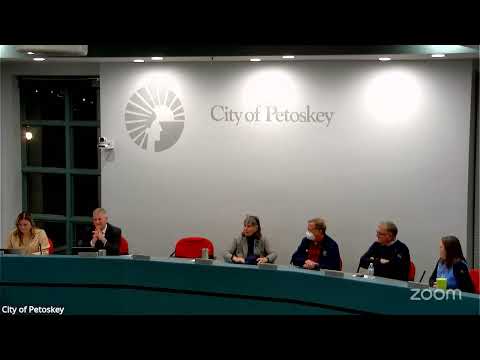
On Jan. 5, 2026, the Petoskey City Council discussed proposed changes to the city’s poverty-exemption policy and voted to delay a final decision until its Jan. 19 meeting so staff can provide comparable municipal examples and fiscal estimates. City Manager Shane Horn told council members they must adopt a policy by Feb. 1 and offered two options: keep the current all-or-nothing federal-poverty-based exemption or retain the 100% exemption while adding phased partial exemptions (75%, 50% and 25%) with example percentage adjustments for each tier.
Horn said staff collected preliminary figures to prompt discussion and noted statutory authority allowing partial exemptions. He also said the city received roughly seven poverty-exemption applications last year and that four were approved by the Board of Review in 2025. "We have to have this done and submitted by February 1," Horn said, urging council to give guidance on whether to proceed tonight or at a later meeting.
The debate centered on policy intent and likely effects. Councilmember Nachtrabe argued the exemption is designed to prevent loss of shelter for residents in dire straits and cautioned that a sliding-scale, income-based discount could deviate from that purpose. He said many denied applicants failed documentation or exceeded asset thresholds and questioned whether partial discounts would actually prevent foreclosures. "The intent of the property... poverty exemption thing is to give them the people that are gonna absolutely lose their homes," he said.
Councilmember Walker countered that a tiered approach would open eligibility to more residents—particularly those on fixed incomes—and could increase applications and community benefit. Walker said phased percentages would provide a pathway to apply rather than dissuade applicants at the outset. Councilmember Wilmot pressed staff for dollar estimates, asking what the current exemptions cost the city and how partials could change that total.
After requesting additional data (municipal comparables with income thresholds and tier percentages, prior applicant profiles with identifying information redacted, and a fiscal impact estimate), councilmember Walker moved to table the item to the Jan. 19 meeting; the motion passed on a 4–0 roll-call vote. Horn said staff will compile the requested comparables and figures in advance of the next meeting.
Next steps: staff will gather comparable municipal policies, provide income/percentage examples and estimate potential budgetary impact for council review on Jan. 19, 2026.