
Board hears broad debate on scrap-tire dumping; asks staff to draft ordinance and defer action
Get AI-powered insights, summaries, and transcripts
Subscribe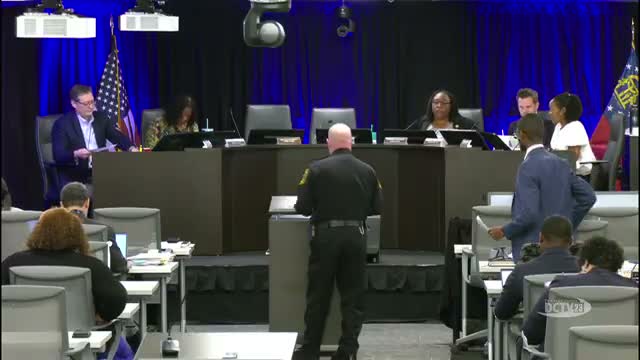
Summary
Committee heard a lengthy presentation and debate on a joint policy statement to address illegal scrap-tire dumping. Commissioners urged ordinance language with enforcement 'teeth,' discussed code enforcement responsibilities, and requested staff draft prescriptive ordinance language for future committee review (item deferred).
The IRBS committee spent the final portion of its Jan. 7 meeting on a proposed joint policy statement to address chronic illegal scrap-tire dumping in DeKalb County. Administration staff read a brief policy statement that emphasized legislative advocacy, intergovernmental coordination and enhanced accountability as three pillars for moving from reactive cleanups to proactive prevention.
Commissioners probed whether a policy statement alone would be adequate. Commissioner Marita Davis Johnson and others argued for county ordinance language that would create penalties, enforce manifest requirements and clarify which department is responsible for ongoing compliance checks. Commissioner Terry urged the board to use existing code and enforcement tools more aggressively and proposed replacing the public-works director in the code with the code-compliance director to ensure auditing of tire generators: “Delete public works director and insert code compliance director,” he said.
County staff and legal counsel said ordinances and code amendments are possible and that staff could draft prescriptive language quickly; legal counsel cautioned that exact ordinance language would need review for preemption and compatibility with state law. Commissioners discussed coordination with the district attorney’s office for felony-level dumping cases and potential restorative-justice alternatives for low-level offenders.
The committee declined to accept the substitute policy as the sole remedy and moved to defer the item (original item 0683) to allow staff to provide redlines, draft ordinances with enforcement options, and a prescriptive plan for implementation. The motion to defer carried as a recommendation to the full committee; staff committed to meet with commissioners individually and return with a standalone agenda item and draft ordinance language.