Get Full Government Meeting Transcripts, Videos, & Alerts Forever!
Get email alerts on the Ethics And Transparency topic
No spam. Unsubscribe anytime.
City attorney briefs traffic commission on Brown Act, conflicts and gift rules
Summary
Michael Irvin of Best Best & Krieger provided a detailed refresher to the Lake Forest Traffic and Parking Commission on legal duties, the Brown Act, the Political Reform Act, contract conflict rules, and gift-disclosure thresholds; commissioners asked practical questions about ex parte contacts and in-meeting research.
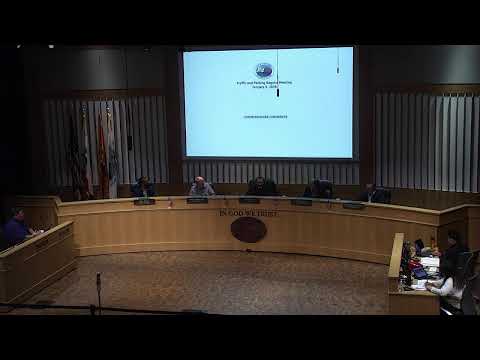
At the Jan. 5 meeting of the Lake Forest City Traffic and Parking Commission, Michael Irvin, representing the city attorney's office and Best Best & Krieger, gave a preparatory briefing on commissioners' legal duties and best practices.
Irvin opened by noting the city's status and the commission's role. "Lake Forest is a general law city, which operates different from a charter city," he said, and he emphasized that operational authority rests with the city manager while the commission acts in an advisory capacity on many items.
He reviewed conflict-of-interest principles under common law and the state's Political Reform Act, telling commissioners they must disclose and recuse when a financial interest exists. On contracts he warned that special statutory rules can apply: the transcript references a contract provision (spoken as "section 10 90") under which a financial interest may make a contract void and trigger severe penalties, potentially barring someone from office.
Irvin walked through gift rules and thresholds cited in the presentation: commissioners must disclose gifts over $50 and the presentation referenced an aggregate/disqualifying threshold of $590 from a single source in a 12-month period; options when offered gifts include refusal, return or donation. He also advised that gifts given to the agency (not the individual) can be treated differently under exceptions.
The briefing covered Brown Act transparency requirements for public meetings and distribution of writings: Irvin cautioned against serial communications and stressed that a quorum discussing city business in private can constitute a meeting that must be noticed. He recommended caution on digital communications and social-media exchanges, noting they can be subject to the same open-meeting analysis.
During Q&A commissioners asked whether they may meet with concerned members of the public to investigate localized traffic issues; Irvin said such meetings are permissible and encouraged, but emphasized that if the person later has "business before the city" the facts are case-specific and disclosure may be required. He also told commissioners they may use tablets to look up publicly available information during meetings but encouraged sharing germane information with staff so it can be included in the administrative record.
Irvin closed by reiterating best practices: avoid participation when fairness cannot be maintained, base decisions on the administrative record, and disclose potential conflicts early.
Next steps: commissioners will apply these guidance points in future deliberations and staff will carry forward any procedural follow-ups. The presentation concluded with an offer to answer additional questions if needed.