
Winnebago County hears lawyers’ pitch to join PFAS litigation; presenters urge retaining counsel on contingency
Get AI-powered insights, summaries, and transcripts
Subscribe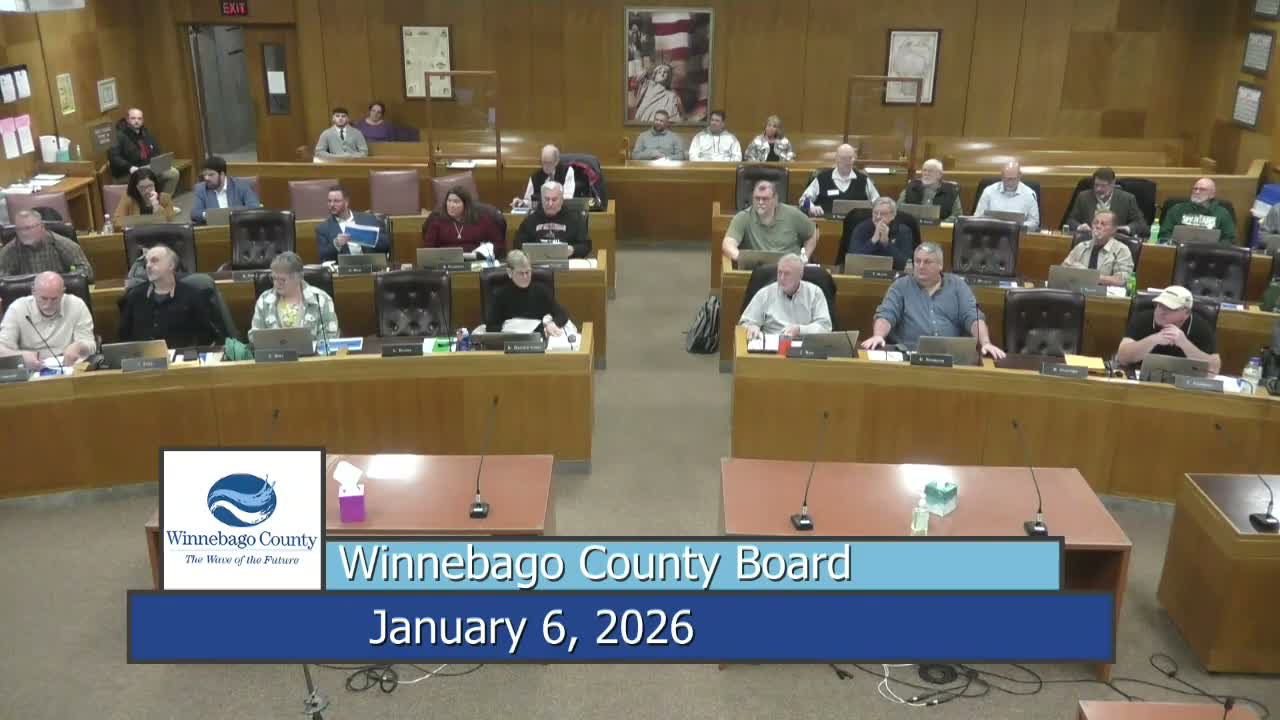
Summary
Attorneys from Baron & Budd told the Winnebago County Board that historical use of PFAS-containing firefighting foam at Whitman Airport and at county landfills could expose the county to remediation costs and recommended retaining counsel on a contingency basis to pursue cost-recovery; no formal vote was taken.
At a Winnebago County Board meeting, attorneys Jason Julius and Chris Edwards of Baron & Budd recommended the county retain outside counsel on contingency to investigate and, if warranted, join multi-district litigation over PFAS contamination tied to firefighting foam.
The presenters said airports, fire-training facilities, wastewater plants and landfills are common sites of PFAS (per- and polyfluoroalkyl substances) contamination and urged the county to begin sampling to establish damages. "It would be to retain counsel," Julius said, summarizing the firm’s recommendation. Julius added that the firm works on a contingency fee and would advance investigation costs: "We would front those costs. If there are no claims, then there would be no recovery. There would be no pursuit of those costs from you by us."
Why it matters: attorneys said prior federal MDL discovery and drinking-water settlements could speed property and airport-related claims; delays, they warned, risk statutes-of-limitation or repose defenses. The presenters cited a consolidated MDL in South Carolina overseen by Judge Richard Gergel and noted the $12.5 billion drinking-water resolution with 3M did not resolve soil or property claims.
Key facts and costs: Julius said the U.S. Environmental Protection Agency has set drinking-water guidance at 4 parts per trillion for PFOA and PFOS and that recoveries for public-entity drinking-water claims in the MDL have ranged from low six-figure amounts up to nine figures. He and Edwards estimated that an environmental investigation can cost "hundreds of thousands" of dollars and that cleanup at an airport can exceed seven figures. They told supervisors the MDL process typically requires a short plaintiff fact sheet for new public-entity plaintiffs and said the heavy defendant discovery work has largely been done, which can shorten timelines to resolution for new plaintiffs.
Liability and scope: the presenters distinguished county cost-recovery claims on property and remediation from personal-injury claims pursued by firefighters, veterans and other individuals, which are being litigated separately in the MDL and address illnesses such as kidney and liver cancer. Julius acknowledged that how settlements are divided and the size of a county’s proven damages will determine how much of cleanup costs are covered by recoveries; he warned counties should not assume manufacturers will cover every dollar of remediation.
Next steps and board action: the presentation closed without a formal motion to retain counsel. Attorneys offered to provide a legal-services contract for the county’s review; supervisors asked about testing logistics, cost exposure and whether local counsel fees were included in the contingency cap (Julius confirmed the stated 25% cap would include all attorneys). The matter will remain informational until the board or staff place a retention agreement on a future agenda for consideration.
The board did not take a vote on retaining counsel at the meeting.