
UNGA president warns cuts to humanitarian budgets are 'a disaster' and urges platform regulation to curb gendered abuse
Get AI-powered insights, summaries, and transcripts
Sign Up Free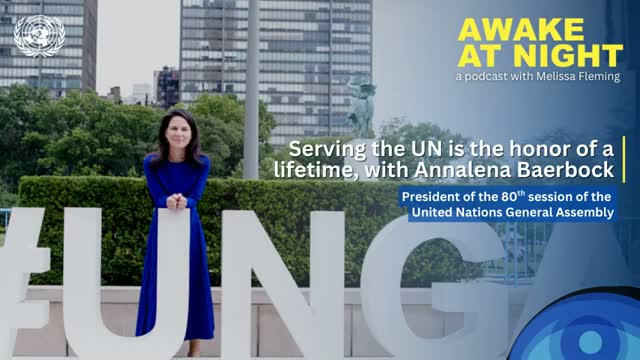
Summary
Annalena Baerbock told Awake at Night that recent cuts to UN humanitarian budgets are translating into lost services—'we are literally speaking about lives'—and urged both tech platforms and governments to act on digital abuse that disproportionately targets women and children.
Annalena Baerbock, president of the UN General Assembly, described sharp humanitarian budget cuts to UN agencies as ‘‘a disaster,’’ saying the reductions translate into fewer services on the ground and immediate harms for vulnerable people. "If we are cutting on the humanitarian field, then we are literally speaking about lives," she said.
Baerbock cited specific operational impacts: she said the World Food Programme and UNICEF "are not delivering baby food packages anymore as they did," and warned cuts to peacebuilding diminish prospects for stability in fragile regions and could raise the risk of wider conflict if blue‑helmet presence is reduced.
On online violence, Baerbock recounted targeted abuse she faced while in national politics and linked a broader pattern of digital gendered violence to threats against women in leadership. She urged tech companies and governments to act: "My message would be: show true leadership and regulate your platforms," she said. She also referenced studies she cited in the interview, noting that deepfake‑related abuses disproportionately target women and that a high share of teenagers have experienced digital violence.
Why it matters: Baerbock framed both issues as interconnected: weakened humanitarian financing undermines basic services for children and families, while unregulated digital spaces expose women and girls to abuse that discourages participation and heightens risk. She said regulation and government enforcement are needed alongside platform accountability to protect both public figures and ordinary children.
Numbers cited in the interview: Baerbock referenced a study figure that she reported as "96 percent" for deepfake‑related abuses disproportionately affecting women and said "58 percent of teenagers have faced digital violence." The interview did not provide original study citations in the transcript; those figures were cited by the speaker during the conversation.
What’s next: Baerbock called for political will to restore humanitarian budgets and for governments and platforms to work on regulatory measures to reduce digital violence and protect survivors and children.