Get Full Government Meeting Transcripts, Videos, & Alerts Forever!
Get email alerts on the Land Use Development topic
No spam. Unsubscribe anytime.
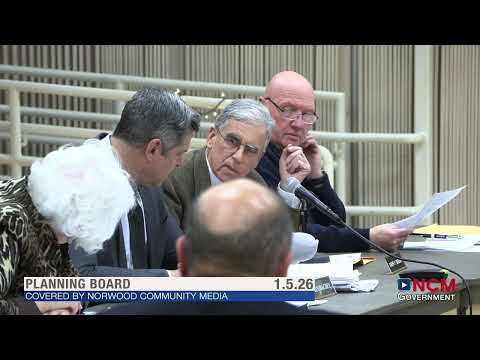
Norwood planning board denies site plan for 55 Lenox over parking, approves stormwater special permit
Summary
After heated debate about mechanized car stackers and whether they satisfy Norwood’s MBTA-overlay parking rules, the planning board denied site-plan approval for a proposed 96-unit project at 55 Lenox Street (4–1) but separately approved a stormwater-related special permit (3–2).
The Town of Norwood Planning Board voted 4–1 to deny site-plan approval for a proposed 96‑unit development at 55 Lenox Street, citing concerns that the applicant’s reliance on mechanized car stackers did not demonstrate safe, reliable circulation and could cause spillover parking in nearby streets. The same board later approved, by a 3–2 vote, a separate special permit that would have granted a bonus floor tied to stormwater improvements.
The proposal, filed under Norwood’s MBTA Community Multifamily Overlay District, would put 96 units on roughly 0.85 acres (about 112 units per acre), far denser than two prior local MBTA projects the board compared: one with 145 units on 2.7 acres (~53 units/acre) and another at 132 units on 2.44 acres (~54 units/acre). Board member Mister Sheehan said the project’s parking solution — 38 mechanized lifts — “is not great if you wanna get to your car every day” and warned, “If this thing fails, where are the cars gonna go?”
Board members split over jurisdiction and interpretation of the bylaws. Ernie and others pointed to memos from town counsel Dave DeLuca and the building inspector, Mr. Pelletier, saying the building inspector interprets and enforces parking rules and that the amended plans meet current parking-count requirements. Ernie argued the application had demonstrated compliance on stormwater and parking counts, saying, “Everything about this project meets the bylaw.”
A planning staff member who read a prepared statement (Speaker 7) urged the board to consider operational and failure scenarios before approving mechanically dependent parking. He said the application did not sufficiently show the parking configuration would “function safely and reliably” and cited concerns about user error, emergency access, and long‑term reliability — matters he said fall within the board’s site-circulation review authority.
After extended discussion about whether the board should “stay in its lane” or address potential long-term spillover and precedent, the board first voted on site-plan approval; the denial motion carried 4–1. Members then debated whether voting on the special permit was moot. The board voted down a motion to deny the special permit (the denial motion failed with 3 no votes and 2 yes votes) and then approved the special permit on a separate motion, 3–2, finding the stormwater improvement criteria for the bonus were met.
The practical effect is that, while the applicant secured approval of the stormwater bonus in principle, the site-plan denial prevents the project from moving forward as submitted. Board members noted that denial would constrain the applicant’s ability to return with the same plan for two years unless the applicant makes significant changes.
What’s next: The applicant may revise the site plan to address the board’s concerns about parking operations, circulation and bylaw interpretation, and submit a new application. The board also suggested the town consider clarifying bylaw language on whether mechanized/stacked parking counts as ground-level spaces in the MBTA overlay.