Commission hears Silver Hill assessment update and discusses outreach, funding and AARP livable‑community effort
Loading...
Summary
Peter Campbell briefed the commission on Silver Hill’s assessment program, noting lower short‑term volumes this year, an inpatient rate of about 7.5%, and evolving funding from partner towns and foundations; commissioners discussed outreach, liaison roles and pursuing AARP recognition.
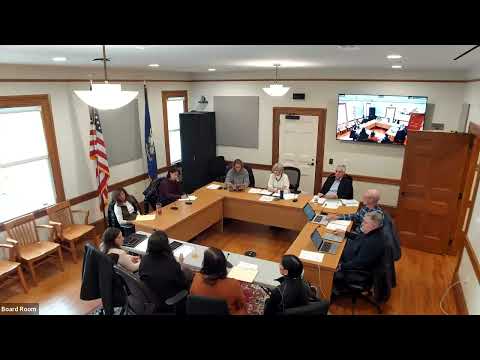
Peter Campbell delivered a high‑level update on the Silver Hill assessment program to the New Canaan Health and Human Services Commission, reporting changes in volume, staffing and funding and prompting discussion about outreach and next steps.
Program trends and clinical data: Campbell said the program changed its name from the “urgent assessment program” to the “assessment program” this year and added Westport as a participating town in June. Citing June–November figures, he said: “Last year, it was 44. This year, it's 25,” and explained most of last year’s higher numbers reflected a September–October surge tied to two local suicides. Campbell noted the program’s demographics are still weighted toward young people—about 56% of attendees are 0–18—and that “7.5 of people who attend are taken inpatient,” a figure he presented as an indicator of clinical acuity.
Funding and referrals: Campbell outlined an operating budget historically in the range of $250,000, initially supported by equal contributions from the town, the board of education and the community foundation (roughly $50,000 each), with Silver Hill providing in‑kind support. He said Westport now contributes $40,000 and Weston $20,000; additional revenue comes from insurance reimbursements and a minority of cash‑pay patients from neighboring towns. The commission noted opioid‑settlement funds are designated to substance‑use work and form part of the broader funding landscape.
Access and awareness challenges: Commissioners pressed on referral sources: schools, family and friends and social media remain primary pathways, while primary‑care referrals account for a relatively small share; Campbell said primary‑care referrals are only about 8% and the program is working to embed with primary‑care providers. The commission discussed public awareness gaps—survey data show many residents understand behavioral‑health importance but fewer know where to seek help—and proposed outreach strategies including more school and counselor engagement.
Systems initiatives and grants: The Community Foundation’s recent behavioral‑health RFP yielded nine grants totaling about $108,000, including system‑level grants (for example, a text‑based ‘Kids in Crisis’ helpline) and resource‑mapping work by organizations such as Laurel House for Lower Fairfield County. Commissioners encouraged coordination across nonprofits and funders to reduce duplication.
AARP optimal livable‑community application: Commissioners agreed to pursue an AARP ‘optimal livable community’ designation as a largely symbolic and potentially useful recognition that could unlock future grant opportunities; they said the application should leverage prior surveys and challenge‑grant materials and will require a town sponsor.
Next steps: The commission assigned liaisons to funded agencies, recommended inviting Dr. Gerber to present to town council and to the commission for a deeper briefing, and agreed liaisons should report back midyear to inform funding decisions.