
Charter Revision Commission hears debate over elected vs. appointed commissions and preservation priorities
Get AI-powered insights, summaries, and transcripts
Subscribe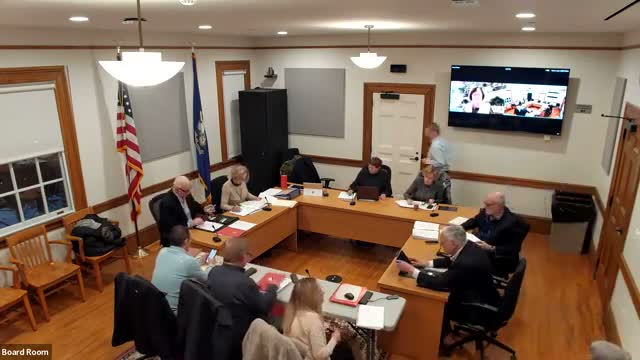
Summary
Commissioners and residents debated whether New Canaan's technical boards should remain appointed or become elected, and public commenters urged the commission to strengthen charter language for historic preservation in response to recent state law changes.
Residents and commission members gathered Jan. 6 for a Charter Revision Commission meeting focused on whether key town boards should be elected or remain appointed and on whether the charter should give stronger priority to historic preservation.
John Goodwin of 70 Bayberry Road told the commission he opposed converting technical commissions such as planning and zoning to elected bodies, saying "my educated guess ... 75% of commissioners would not be willing to run for elected office" and that converting some panels to elections would reduce the technical expertise available. He suggested codifying a role for commission chairs in screening or approving appointees so that a chair could help ensure nominees have the needed backgrounds.
A preservation advocate who spoke during public comment urged the commission to treat preservation as a formal charter priority rather than a courtesy. The speaker recommended options including a dedicated preservation fund, explicit charter language requiring planning and zoning to consider architectural and landscape preservation, a permanent conservation and preservation commission, and mechanisms such as overlay zones or expanded historic-district review. The speaker cited a recently enacted state measure (referred to in the meeting as House Bill 502) and warned that state-level changes—such as allowances for increased housing density without parking—mean local officials need clearer, enforceable tools to protect features the town values.
Commissioners asked technical questions about how preservation tools would work in practice. One commissioner noted that expanding a state-designated historic district can make properties eligible for grants and strengthen legal standing in court; another asked the Planning & Zoning (PNZ) and historic-district representatives to come to a future meeting to outline specific language and legal steps required to implement any charter or regulatory changes.
The broader elected-versus-appointed discussion threaded through the preservation debate. Supporters of keeping appointments emphasized the ability to recruit people with technical skills—architects, engineers, lawyers and financial experts—while supporters of elections argued that electing certain boards can increase accountability to voters. Commissioners and public speakers agreed to pursue more targeted research, including 1-on-1 interviews with officials from towns the commission has identified for comparison, and to ask the Connecticut Conference of Municipalities research staff for additional data and white papers.
Next steps: the commission assigned a subgroup to compile comparative data on appointed versus elected boards, to invite PNZ and historic-district representatives back for a detailed conversation, and to draft possible charter language options that would preserve flexibility while clarifying the tools the town could use to protect historic resources.