Get Full Government Meeting Transcripts, Videos, & Alerts Forever!
Get email alerts on the Board Organization topic
No spam. Unsubscribe anytime.
ROCORI school board reorganizes officers, approves per‑diem increase and shifts meeting calendar
Summary
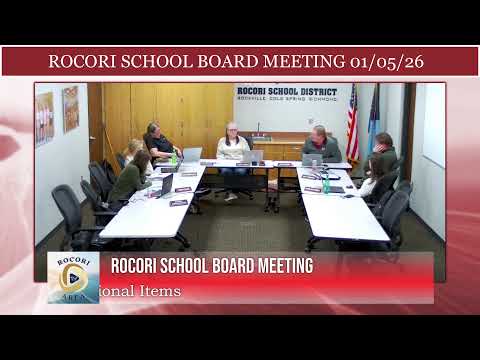
At its organizational meeting, the ROCORI Public School District board elected a new treasurer, left the chair position unresolved, approved a small per‑diem increase tied to the state percentage, and adopted a revised meeting calendar and earlier start time.
ROCORI Public School District held its annual organizational meeting to elect officers, confirm committee assignments and approve administrative arrangements for 2026. The board approved a modest per‑diem increase tied to the state rate, selected a treasurer, and adopted changes to the district’s meeting calendar and start time.
Board members opened nominations for the four officer positions. After nominations and floor discussion, the board did not coalesce on a new chair and continued the meeting under the outgoing chair’s facilitation. “I did communicate to all of you individually about that,” the outgoing chair said when announcing the decision to step down (SEG 095–099). Nominations included Robin and Kayla; both were put to the body in separate voice votes but no chair was confirmed during the meeting.
The board appointed Matt as treasurer. The chair nominated Matt for treasurer and the motion passed by voice vote; the board then confirmed committee assignments, placing members on buildings and grounds, finance, policy, technology and other standing committees.
Members discussed tying board per‑diem increases to the same percentage used by the state. The business manager presented the calculation that a 2.73% increase would raise the total monthly payout by about $165—roughly $700 annually for the group. After discussion and comparisons to similar districts, a motion to approve the percentage‑linked increase passed. “So a motion by that. Second by Lynn,” the chair said before the voice vote (SEG 1406–1417).
The board approved a revised calendar for 2026, removing two October meetings (Oct. 12 and Oct. 26) and replacing them with a single Oct. 19 meeting, and agreed to try a 5:30 p.m. start time for regular meetings. Members discussed posting requirements and flexibility if the earlier time proved impractical. The motion to adopt the adjusted calendar and change the meeting time passed by voice vote (SEG 1680–1690).
On organizational housekeeping, the board reviewed and recommended policies and administrative items, including confirming the district’s official depositories (Granite Bank of Cold Spring and the Minnesota School District Liquid Asset Fund), delegating authority for electronic transfers to designated officials, and setting fixed‑asset accounting thresholds ($10,000 per item; $25,000 for grouped purchases). The board also authorized the administrative assistant to sign clerk documents when the clerk is unavailable, noting that the administrative assistant (Amy) typically performs that role around election duties (SEG 1796–1804).
The meeting included discussion of legal counsel procedures. The board named several outside law firms for 2026 and debated who should be authorized to contact counsel—some members favored limiting contact to the superintendent; others said the chair or designee should retain that ability given the chair’s role as the board spokesperson (SEG 1897–1956). Members referenced board policy and Robert’s Rules when weighing the tradeoffs.
The student‑representative agenda item was moved from the organizational/consent section to an action item for separate discussion because members said they wanted more time to consider options after limited response from students (SEG 021–035). The board did not take substantive action on that item at this meeting.
The board next steps identified during the meeting include finance‑committee follow‑up about banking options and interest rates, committee reporting assignments for the year, and scheduling training and onboarding for new and returning board members through MSBA resources.
The organizational meeting record concluded with the board moving forward on the approved administrative items and scheduling follow‑up work for committee and staff action.