Get Full Government Meeting Transcripts, Videos, & Alerts Forever!
Get email alerts on the Human Resources topic
No spam. Unsubscribe anytime.
Salem HR reports 143 new hires since July, outlines retention and diversity gaps
Summary
HR director Jill Conrad told the School Committee the district has hired 143 people since July but still faces a gap between student demographics and teacher demographics (about 62% students of color vs. ~14% teachers of color); the district plans apprenticeship pathways and data-system improvements.
The School Committee on Jan. 5 heard an HR update from Jill Conrad, Salem Public Schools’ executive director of human resources, detailing hiring, retention and diversity data and the district’s plans to expand pipelines into teaching.
Conrad said the district has hired 143 new staff members since July 1, most of them teachers and paraprofessionals, and that the number of new hires this year is roughly 20 fewer than last year. She described HR’s expanding responsibilities — from background checks and badges to coordinating student-teacher placements — and stressed the importance of robust data systems to track staffing.
On retention, Conrad explained that DESE-published retention metrics lag district data: DESE reports a 78.7% teacher retention rate for a recent reporting period, while the district’s internal calculation is approximately 85%. “It’s important,” Conrad said, to understand how DESE compiles the data and to improve internal reporting so the district can provide up-to-date information on request.
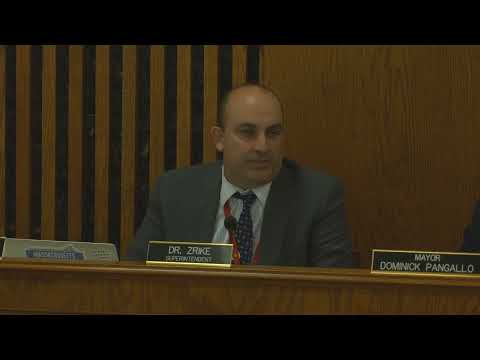
Conrad and the superintendent highlighted a persistent representation gap between the student body (about 62% students of color) and district teaching staff (about 14% teachers of color). District-wide staff of color makes up about 25.5% and paraprofessional staff about 37.5%. The HR team described multiple approaches to address the gap, including grow-your-own pipelines, international recruitment partnerships and targeted apprenticeship funding.
Programs and training: Conrad said the district is one of about eight selected for a registered teacher apprenticeship program grant focused on special education; that grant will allow paraprofessionals to serve as apprentices while pursuing licensure over the next three years. The district also reported past training work with TNTP to improve equity in hiring and said it will continue anti-bias and hiring-manager toolkits for principals and department heads.
Committee concerns and next steps: Committee members asked for more granular data (by school and role), for stronger inclusion and belonging practices in some school cultures, and for survey language that explicitly addresses belonging for transgender and LGBTQ+ students. Conrad and other staff said the district will expand data capabilities, continue training and refine outreach to recruit and retain more diverse licensed teachers.
The HR office said it will hire a coordinator to manage pathways, continue building a more cohesive data system (supported in part by grant funding), and report back with more detailed school-level breakdowns.