Farmers Branch moves to city‑issued phones for mayor, council to boost transparency
Summary
City Manager Ben Williamson told the council the city will standardize council phones (iPhones) and management software to preserve records and maintain continuity of contact information; staff estimated a $10,000 first‑year cap and a roughly $6,000 annual recurring cost for software and support.
The Farmers Branch City Council on Jan. 6 agreed in principle to move forward with city‑issued mobile phones for the mayor and city council as a step to improve transparency and continuity of government.
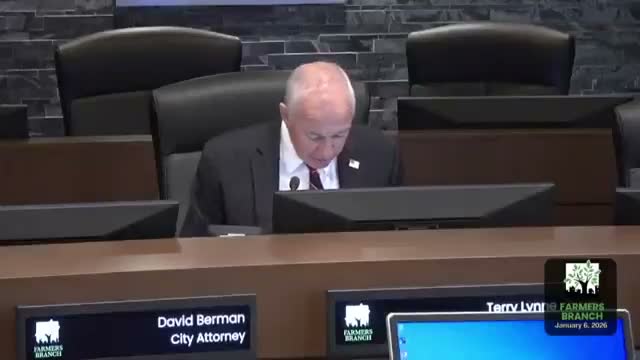
City Manager Ben Williamson said the proposal would create city‑managed devices that carry official phone numbers and city email addresses so residents would not need to change contact information when elected members leave office. "This is about transparency," Williamson said, adding that the phones would be standardized as iPhones and managed by IT so official communications are captured and retained.
Williamson estimated a Year‑1 expenditure of about $10,000 to acquire devices, accessories and setup, with recurring costs falling to roughly $6,000 annually thereafter, most of which would cover software that archives council communications. He said iMessage functionality would be disabled for official devices so messages could be managed; the city secretary's office would handle open‑records requests.
Council members asked how the process would affect personal devices and what notifications members would receive when records are requested. Councilwoman Villafranca sought clarification that personal phones would remain subject to records requests when relevant to a member's official duties; Williamson said personal devices remain custodial for two years when the content is relevant to council business and that the city secretary will assist in reviewing such requests. "We will let you know as well if your information is being requested as a courtesy," Williamson said.
Councilwoman Bennett, who said she requested a city‑managed account three years ago, welcomed the plan as a way to reduce administrative burden and improve continuity of constituent service. Councilman Neal asked staff to provide examples of how other cities have implemented similar systems and raised operational questions such as call‑forwarding and helping residents identify their district; Williamson said staff will follow up and aims to roll out the program by February.
There was no formal recorded vote; council provided a soft direction to staff to proceed with procurement and policy work for implementation. Next steps identified in the meeting included staff returning with policy recommendations, technical details on call forwarding and examples from peer cities, and a rollout timeline.