
Knox County Schools audit finds recurring internal control issues; district pledges corrective action
Get AI-powered insights, summaries, and transcripts
Subscribe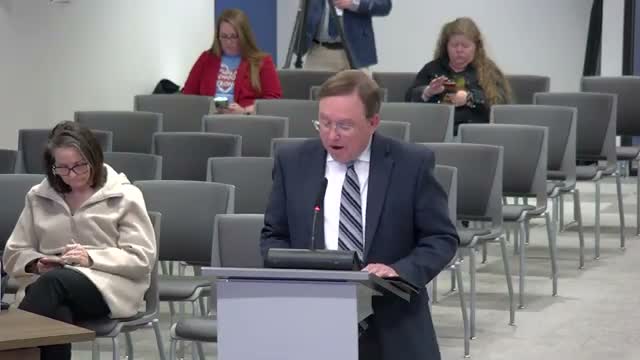
Summary
Auditors told the Board Jan. 5 that internal school funds handled roughly $27.5 million in receipts in 2024-25 and that recurring control weaknesses remain; district officials said principals will submit corrective action plans beginning FY26 and the district has engaged QCPAs to strengthen oversight.
Ted Hodes, an auditor with PEW CPAs, told the Knox County Board of Education on Jan. 5 that a 2024-25 audit of internal school funds showed heavy transaction volume and a set of recurring internal control findings.
"The total cash from all the schools at the June 2025 was over $18,000,000, 18,600,000," Hodes said, and he reported combined receipts of about "$27,500,000" with expenditures near "$25,800,000." He said the engagement covers funds held at schools, not central office transactions, and that the audit is a cash-receipts-and-disbursements review.
Hodes listed the most frequent findings: segregation of duties, negative fund balances, disbursement and receipt documentation, purchase orders, ticket reconciliations, fundraising and resale activities, school support organizations (SSOs), approval or transfers, and travel policy. He said two new findings this year involved a supplemental salary payment processed through school funds that should have been handled by central office and SSO collections of participation fees.
"We had 1 instance there was a supplemental salary payment made through the internal school funds, where it should be made through central office," Hodes said.
Jennifer Hemmelgarn, who introduced the audit presentation and leads internal school funds work, responded to board questions about SSOs and payment platforms. "All student fees should go through the school through internal school funds," she said, adding that most school transactions are now processed through Givebacks (an electronic platform) though some nominal cash payments still occur and some registered SSOs maintain separate bank accounts.
Board members pressed for clarity on which findings are improving and which are worsening. Hodes said some documentation-related findings had more instances this year while others, such as negative fund balances, showed significant improvement. He noted management responses accompany every finding and highlighted two district steps intended to address the issues: requiring principals at cited schools to submit assigned corrective action plans to the director of internal school funds beginning in FY26, and engaging QCPAs to evaluate current practices and oversight with an emphasis on best practices.
District staff said the audit report is lengthy (over 400 pages) and that the presentation was a condensed overview; board members were invited to submit further questions to Hemmelgarn or Hodes after reviewing the full report. The board did not take formal action on the audit during the session; staff said the final audit communication letter and the district's corrective action plan will mirror management's responses and be finalized in the coming weeks.