
Duluth schools outline course-catalog changes; journalism offered as digital CTE pathway, civics aligned into social studies
Get AI-powered insights, summaries, and transcripts
Subscribe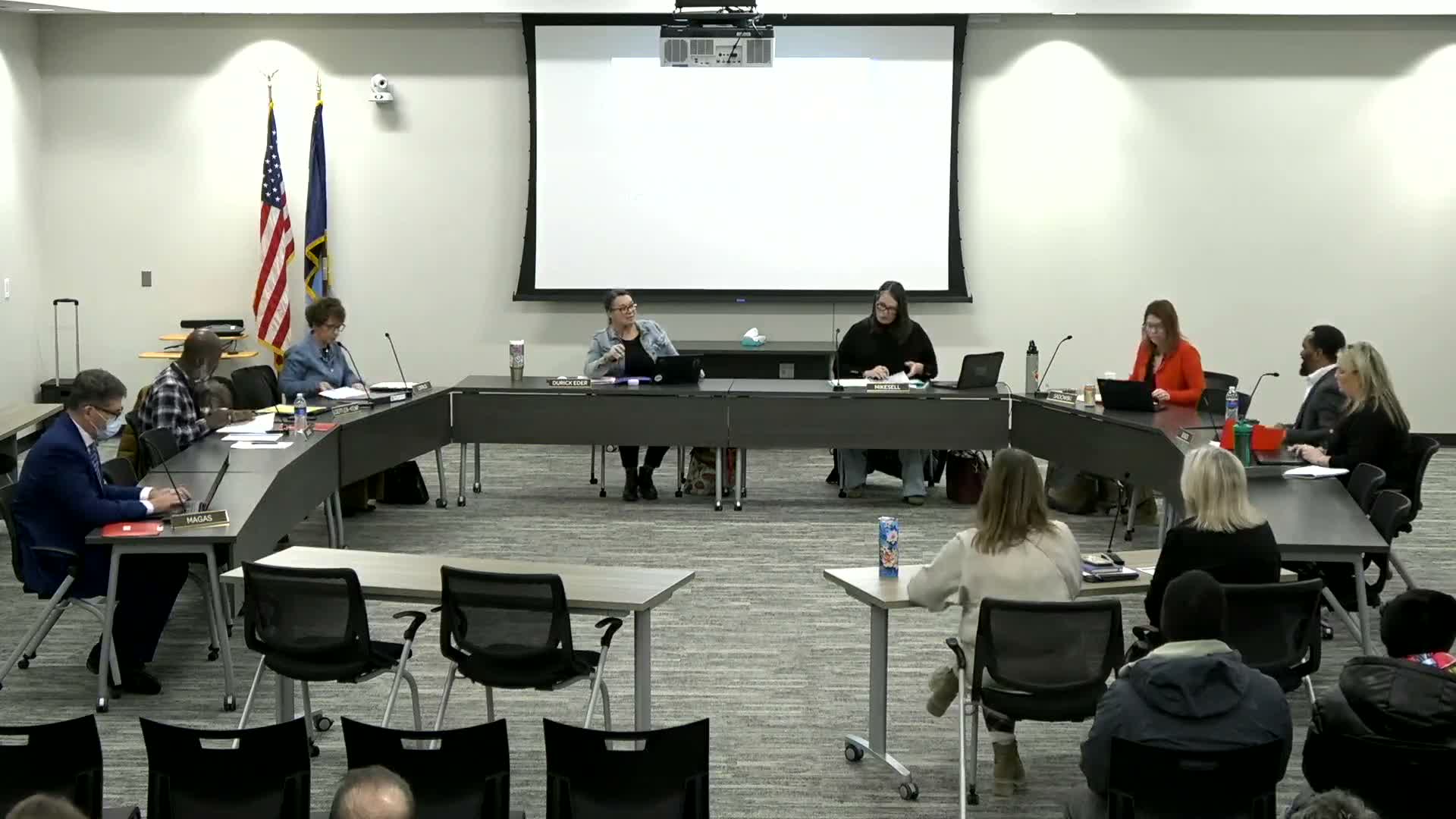
Summary
Duluth Public Schools presented a set of 2026–27 course-catalog changes that add CTE-aligned communications courses (a two-course digital media/journalism pathway), expand American Sign Language, add a Read Act–required reading-acceleration class, and move some civics content into Social Studies 9 while preserving a grade-12 civics course.
Duluth Public Schools administrators on Thursday presented proposed 2026–27 course-catalog changes that would reorganize several electives and add new career-and-technical-education (CTE) pathways, including a two-course communications sequence described as "student-run digital journalism and media production." Assistant Superintendent Bonds introduced the packet and Director Larva and her team explained the specific additions, edits and deletions that the board will review for approval at the January school board meeting.
Why it matters: The changes could shift how high-school students access civics education, media skills and CTE credentials. Staff said the district is aligning required courses to new state social-studies standards, expanding American Sign Language (ASL) course offerings, and creating a Digital Media Design and Production course followed by Advanced Production and Broadcasting to form a communications pathway.
Director Larva described the journalism pathway as broader than a single school newspaper. "It's journalism. Journalism looks different in today's world," she said, adding that the new Media Lab 1 will teach students to create newsletters, podcasts, videos and social media content as part of a CTE communications pathway. Julie Stauber, the secondary MTSS and curriculum-and-instruction coordinator, was introduced as a lead on catalog development.
Several board members pressed for more detail on the future of traditional student newspapers. "I am very disappointed about the journalism," Member Loeffler Kemp said, asking whether students and families had been consulted and whether former newspaper offerings would return as an extracurricular or school-specific product. Director Larva and other staff said Danette Sebo (CTE lead), who was not at the meeting, has been working with CTE teachers and advisory boards and that the district will provide more specifics at the formal board meeting.
Staff also clarified that the district is not deleting civics but aligning civic standards differently. "Duluth public schools are not deleting civics," a board member said; staff explained that civics content will be available in Social Studies 9 (which will incorporate human geography) and continues to be emphasized in the twelfth-grade civics course under the new standards.
On reading interventions, staff described a new high-school reading-acceleration course required by the state Read Act. Screening for students in grades 4–12 will begin this month, and placement in the class will be based on assessment results. Staff noted parents have the right to decline testing and that the district has not completed screening yet, so exact enrollment numbers for the new intervention are not available.
Several implementation details remain unresolved: who specifically served on advisory boards that recommended the communications/CTE changes, whether teacher and student input on journalism was captured, and the cadence or format for a district-wide newspaper if any. Board members requested that the administration provide written clarifications and stakeholder lists before the January vote.
Next steps: District staff will provide further documentation and stakeholder information ahead of the board meeting at which the course catalog changes will be considered for approval.