Get Full Government Meeting Transcripts, Videos, & Alerts Forever!
Get email alerts on the Water Infrastructure topic
No spam. Unsubscribe anytime.
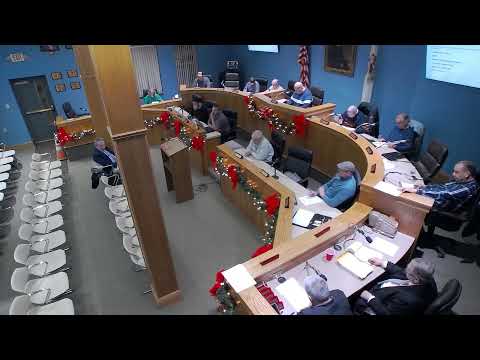
LaSalle opens public hearing on $3.515 million water main replacement project
Summary
LaSalle City Council opened a public hearing on a proposed $3,515,000 water main replacement project covering 1st Street, 7th Street and Rockwell Road. Donahue & Associates outlined scope, financing through an Illinois EPA loan and environmental mitigations including protections for bats and tribal consultation.
LaSalle City Council opened a public hearing on a proposed $3,515,000 water main replacement project that would replace undersized or aging mains on 1st Street, 7th Street and Rockwell Road.
Donahue & Associates engineer Terrence Boyer identified himself for the record and said the work would replace a 4-inch main on 1st Street with an 8-inch main and install a 12-inch main on Rockwell Road where repeated repairs have occurred. Boyer said the city is seeking funding through the Illinois Environmental Protection Agency's Public Water Supply Loan Program to finance the estimated construction cost of $3,515,000.
The project matter-of-factly addresses costs and repayment. Boyer said the loan scenario used in the agency's evaluation assumes a 20-year term at an estimated interest rate of 2.16%, producing an estimated annual repayment of $216,592. He also said qualifying applicants may be eligible for extended repayment terms (30–40 years), reduced interest rates as low as 1% and potential principal forgiveness; he said potential forgiveness is currently up to 30% but is not guaranteed.
Boyer presented affordability figures used in the IEPA review, saying the current average monthly residential water service is $36.12 and that the IEPA’s financial evaluation estimated the project would amount to about 0.8% of the city’s median household income. The presentation noted the city has about 3,870 service connections and estimated average monthly residential use of roughly 3,200 gallons.
Environmental reviews and mitigations were a central part of the presentation. Boyer said the State Historic Preservation Office and Illinois Department of Natural Resources reviewed the project and indicated no anticipated impacts to historic architectural or archaeological resources under Section 106 of the National Historic Preservation Act of 1966. An ECOCAT screening identified protected resources near some submitted locations along Rockwell Road; Boyer said detailed design will document measures to avoid those resources.
IDNR guidance included timing restrictions for tree removal to protect Indiana bats and northern long-eared bats. Boyer said trees that could provide bat roosting habitat — defined in the IEPA language provided — should be flagged and avoided between April 1 and November 14; if tree removal during that period is unavoidable, a qualified biologist should assess suitability for bat habitat.
On permitting and consultation, Boyer said the U.S. Army Corps of Engineers reviewed the project information and issued an email indicating the proposed activity does not require a Clean Water Act Section 404 permit. He also said tribal nations with property interests were notified and that the Prairie Band Potawatomi tribe acknowledged interest and requested that, if human remains or archaeological materials are uncovered, work should stop and the tribe be included in further discussions before removal.
During public questions, an attendee identified as "Mister Moore" asked about potential loan forgiveness. Boyer replied, "I think the potential forgiveness is up to 30% at this time," and added the agency’s incentives and forgiveness programs change periodically and are not guaranteed. Boyer also told the public the preliminary environmental impact determination is available for inspection at City Hall and provided an IEPA contact, Fred Blandford, for additional information.
The council closed the hearing after presentations and questions; the record remains open for a 10-day public comment closeout following the hearing notice. The council did not take a final financing vote at the hearing; next steps in the process include completing detailed design, documenting any required environmental mitigations, and awaiting IEPA loan determinations.