
ShadowCats 806 urges Borger to use warnings, TNR referrals before citing animal feeders
Get AI-powered insights, summaries, and transcripts
Subscribe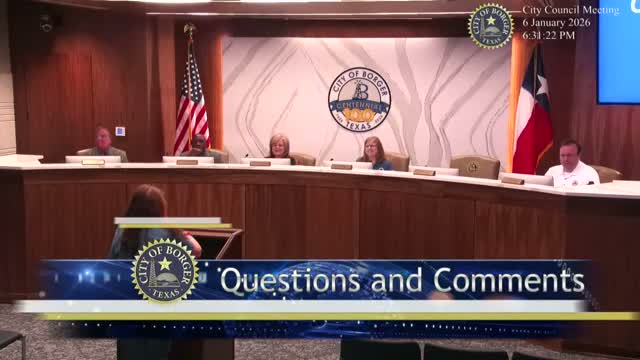
Summary
At a Borger City Council meeting, ShadowCats 806 asked the city to require written warnings, referral to TNR partners, and a 90-day compliance window before issuing citations under Ordinance 1,725. Council members indicated the ordinance already requires warnings and offered to include the group's contact information.
Amy Zavala, executive director of ShadowCats 806, told the Borger City Council on June 1 that the city's stray-animal ordinance should be used as a pathway to sterilization and vaccination rather than as a punitive measure.
ShadowCats 806 asked the council to change the order of enforcement under Ordinance 1,725 so that: the city issues a written warning and guidance before issuing a citation; caregivers are referred into a city-approved TNR (trap-neuter-release) pathway with ShadowCats 806 or another approved partner; and a 90-day compliance window is granted to sterilize, vaccinate and document colony standards. "These caregivers are not the problem, unfixed cats are the problem and caregivers are how we fix them," Zavala said.
The request followed Zavala's summary of research and shelter studies the group says show feeding bans alone do not reduce cat populations and that targeted TNR with caregiver involvement reduces intake and euthanasia. Zavala also cited public-health risks from unmanaged colonies and said caregiver-based vaccination helps mitigate those risks.
An unidentified city official responded that "the ordinance does require warning first. It is not straight...to citation," and said the ordinance's intent was to address widespread wildlife feeding and dumping of food that attracts multiple species. The official encouraged ShadowCats 806 to provide contact information so the city can include it in the warning process.
ShadowCats representatives said a State of Texas grant, which began in September, helped them sterilize 63 cats and schedule 30 more; they said that funding will run low without additional grants or fundraising. The council member noted a local funding avenue, the Amber Fund administered by the Amarillo Area Foundation, as one option to explore.
The public comment ended after council members thanked the presenters and asked ShadowCats to share contact details so officials can include the nonprofit in enforcement warnings.
The council did not take formal action on the requested enforcement change during this meeting; the speakers were invited to follow up with staff about incorporating the group into the warning and referral process.