
Lake County proclaims January 2026 Human Trafficking Awareness Month, highlights local training and school outreach
Get AI-powered insights, summaries, and transcripts
Subscribe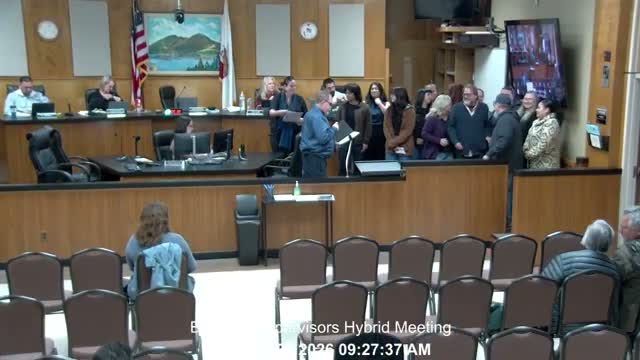
Summary
The Lake County Board of Supervisors adopted a proclamation designating January 2026 as Human Trafficking Awareness Month and heard program updates from Lake Family Resource Center and partners about trainings, motel-room stickers, school presentations and a pilot to train high school students to educate middle-schoolers.
The Lake County Board of Supervisors on a proclamation-designation read and adopted a resolution naming January 2026 Human Trafficking Awareness Month and urged residents to report suspicious activity to law enforcement.
The proclamation, read by the Chair and signed by 2025 Chair EJ Crandall, cited global and state figures — including a reference to "32,000,000 people around the world" affected by trafficking — and listed local partners including Lake Family Resource Center, the district attorney's office, the Sheriff's Office, Lakeport and Clear Lake police departments and seven local Pomo tribes. The board formally "passed and adopted" the proclamation during the meeting.
Why it matters: County officials and local nonprofits said the designation is intended to raise visibility for ongoing services and prevention work. Jessica Layton, a human trafficking advocate with Lake Family Resource Center, told supervisors, "Awareness leads to action," and urged community vigilance and support for survivors.
Program details and outreach: Kara Roberts, coordinator of the county human trafficking program, said the local effort has operated for about six years and that staff are seeking another three-year grant to continue work. Roberts reported training "well over 500 professionals and community members" countywide and serving "over a 150" people, and said the program has delivered "over 10,000 services" of various kinds. Roberts described outreach tactics now in use: magnets on local law-enforcement patrol cars, donated coffee sleeves distributed around the county and a motel-room sticker campaign listing local resources for vulnerable guests.
Rotary and schools: Mark Lipps, area governor for Lake County Rotary Clubs, outlined Rotary's participation in school presentations and a pilot in which high school students trained by the Polly Klass/PolyClass program will present to middle-school audiences. April Leiferman, a longtime educator and Rotary liaison, said the Kelseyville pilot presentation will be recorded and used as a replicable resource for other schools.
Local officials' perspective: Supervisors thanked the presenters and described local impacts. Supervisor Pyskus recounted a family member targeted through social media that led to a sheriff-led sting; EJ Crandall described labor-related trafficking risks, citing cases in which visas or green cards were withheld and vulnerable farmworkers lived in substandard housing. A member of the public, Betsy Khan of Upper Lake, cited a recent grand jury report she said described Lake County as a location traffickers use to hide people before moving them to metropolitan markets and recommended the public read that report.
What happens next: Board members asked that outreach continue; presenters said they are writing for a multi-year grant to sustain services, and organizers expect recorded materials from the Kelseyville pilot to be available for other schools. The board closed the item after public comment and a group photo.