
Board advances zoning amendments to implement county housing element despite concerns about parking, infrastructure
Get AI-powered insights, summaries, and transcripts
Subscribe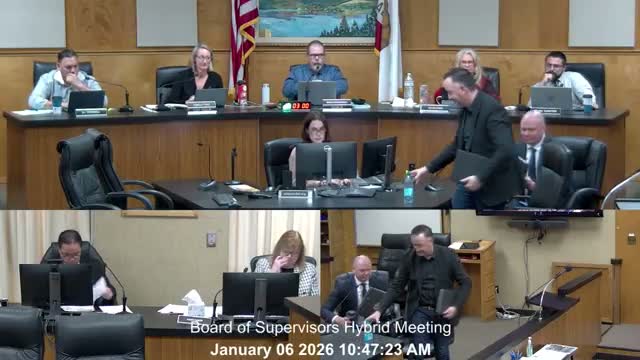
Summary
After extended public comment and supervisor debate, the board approved first reading of a zoning ordinance to implement multiple sixth-cycle housing element tasks and adopted an internal policy; the first reading carried 4-1 amid objections about one-size-fits-all rules and parking/infrastructure impacts.
The Board of Supervisors on Jan. 6 held a public hearing and approved the first reading of an ordinance amending multiple articles of the county zoning code to implement tasks from Lake County’s sixth‑cycle housing element. The vote on the first reading passed 4-1; the board also adopted an internal Community Development Department policy implementing HE-6 tasks by the same margin.
Community Development Director Maria Turner summarized the amendments: an internal policy to expedite processing for residential projects that include a significant portion of units restricted to very low, low or moderate income households; amendments to allow additional residential development in community commercial areas (small-scale mixed-use); allowing supportive housing by right in zones with access to services; removing a 300‑foot buffer and setting a 180‑day maximum stay for emergency shelters to comply with state law; allowing agricultural employee housing of 6–12 units (or up to 36 beds) in zones permitting agriculture; and removing certain ministerial barriers for second-story residential units and for multifamily projects of 20 or more units.
Supervisor Sabatier strongly objected to several provisions, arguing the package is a “one size fits all expectation of all communities in the state” and warning that the changes would not address the county’s affordability and construction-cost challenges. He raised concerns about parking, septic and street infrastructure in rural communities and possible environmental justice outcomes if low-income areas receive unplanned high-density development. Supervisor Hahn and others also questioned reduced parking requirements given limited transit in many parts of the county.
Director Turner said the housing element was previously adopted and certified by the state (adopted 2019, certified 2020) and that these implementation tasks are items the county committed to complete; she confirmed that many controls such as height limits remain in place and staff will post maps of identified housing sites.
After public comment urging more time and consultation with regional partners (RCRC, HCD), the board approved the first reading 4-1 (Supervisor Sabatier opposed). The ordinance will be advanced to the next available board agenda for a final hearing. The board also adopted the recommended internal Community Development policy as described on the agenda.