
Lake County board advances zoning changes to meet state housing-element tasks after heated debate
Get AI-powered insights, summaries, and transcripts
Subscribe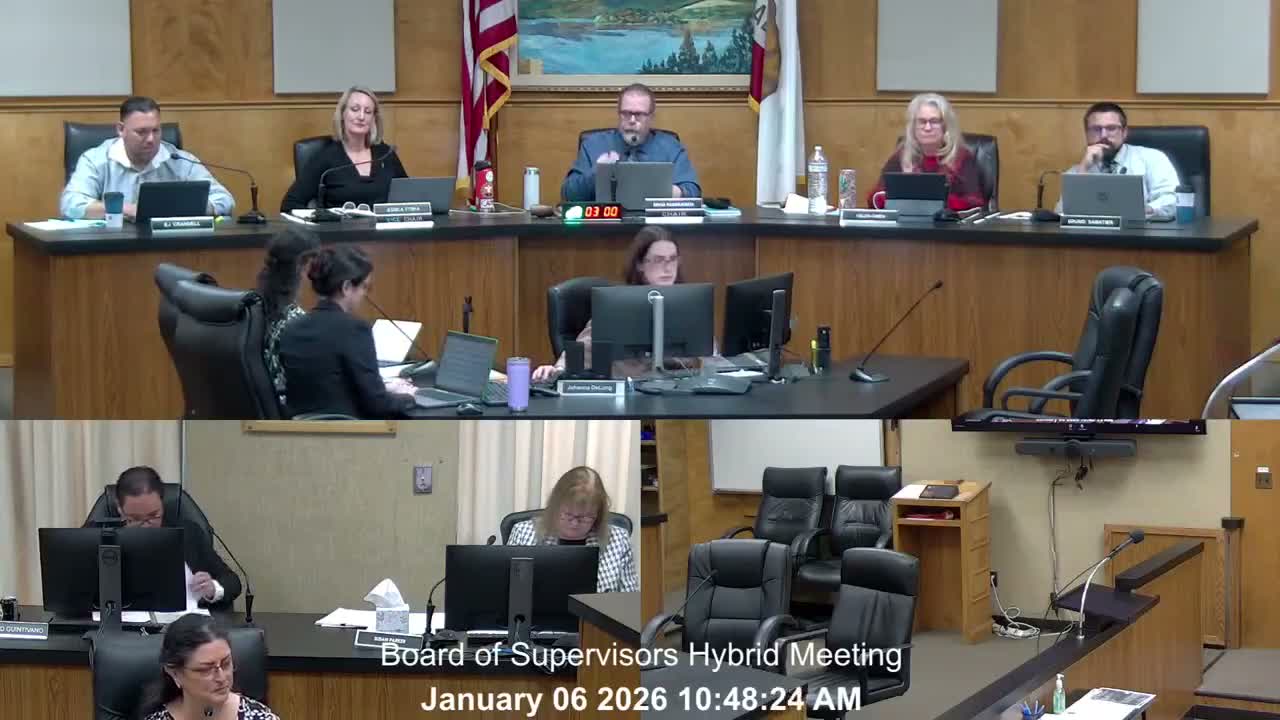
Summary
The Lake County Board of Supervisors approved the first reading (4-1) of an ordinance amending multiple zoning articles to implement several sixth-cycle housing-element tasks, while dissenting supervisors and members of the public warned the measures are rushed and may not suit the county's rural infrastructure.
The Lake County Board of Supervisors advanced the first reading of an ordinance on Jan. 6 to amend multiple sections of the county zoning code to implement tasks from the sixth-cycle housing element, a move the state required as part of the county's housing compliance. The ordinance changes passed on first reading by a 4-1 vote; the board also voted 4-1 to advance the ordinance to a future agenda and adopted an internal Community Development Department policy to implement HE-6.
Community Development Director Maria Turner told the board the package focuses on removing regulatory barriers to housing in parts of the county where services exist and on bringing the county into compliance with state law. The proposed changes include allowing additional residential development in community commercial zones (HE-38), permitting supportive housing by right where support services are available, setting a 180-day maximum stay for emergency shelters and removing a 300-foot buffer for shelters (HE-60), expanding allowances for agricultural employee housing, removing a minor-use-permit requirement for second-story residential units and some multifamily projects, and enabling low-barrier navigation centers consistent with state requirements.
Turner said the housing element and its tasks were evaluated in environmental review and that implementing those tasks is considered to have no new environmental impact beyond what was already studied. She also said staff will post a map of candidate sites from the sixth-cycle housing element on the county web pages so the public can view parcels discussed in recent cycles.
Supervisor Sabatier, who cast the lone no vote on the ordinance's first reading, urged caution. "There's a reason we don't build housing here, and it's not because of our zoning," he said, arguing that high construction costs, lack of infrastructure (curbs, gutters, wide streets, public transit, sewer or septic limitations) and parking shortages mean state-directed zoning relaxations could create problems for Lake County rather than solve them. Sabatier also said he questioned whether local shelters and facilities currently meet some of the standards the ordinance appears to require and urged county staff and regional partners to invite state housing officials to see local conditions in person.
Public commenters echoed calls for more local planning and time to review details. Holly Harris of Clear Lake Oaks asked for clearer definitions of "qualifying projects," oversight to ensure restricted units remain affordable, and fixes to confusing ordinance numbering. Betsy Khan and Margo Kambara urged engagement with the grand jury report and regional partners. Director Turner said definitions exist in Article 68 and staff would post additional materials.
Board members who supported the actions said adopting these changes fulfills commitments made in the county's adopted housing element and preserves eligibility for certain state funding and grant programs. Supporters said that without implementation the county risks losing future grant eligibility or facing more intrusive state action.
What passed and what comes next: the board approved the ordinance on first reading (title only) by a 4-1 vote, agreed to advance it to the next available board agenda (4-1), and adopted an internal CDD policy to implement HE-6 (4-1). The items will return for further consideration and a second reading, and staff said they will post supporting maps and documents for public review. The board was advised that refusing to implement items certified in 2019 could affect grant eligibility and invite potential state enforcement actions.
The debate centered on how to balance compliance with the state's housing requirements and the county's rural infrastructure and character; members asked staff to pursue design standards and continued outreach to regional bodies including RCRC and HCD as the process continues.