
Council approves second Bluebird Canyon home with modest height concession and living‑wall mitigation
Get AI-powered insights, summaries, and transcripts
Subscribe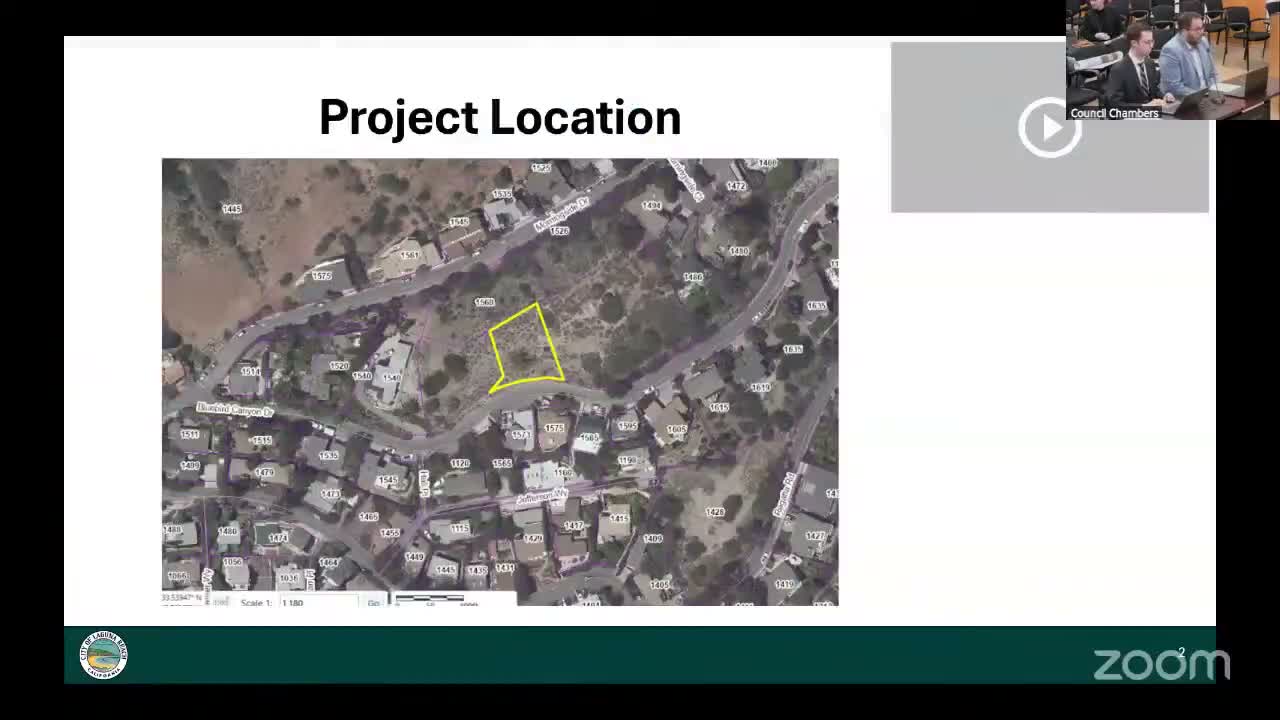
Summary
The council overturned the DRB denial for 1560 Bluebird Canyon Drive and approved the project with conditions: the applicant guaranteed a 10‑inch reduction in roof bridal line and agreed to good‑faith efforts to reach a full 1‑foot reduction, plus landscaping/retaining‑wall mitigation developed with city staff and fire‑safety conditions; the vote was unanimous.
Laguna Beach City Council unanimously overturned the Design Review Board’s denial of 1560 Bluebird Canyon Drive and approved the coastal development permit and design review application with negotiated conditions aimed at reducing visual impact and addressing retaining‑wall visibility.
Staff framed this appeal alongside the neighboring 1550 Bluebird matter and reiterated the legal constraints that SB 450 and the Housing Accountability Act place on local denials of eligible housing projects. Applicant representatives said site constraints—driveway turnarounds, existing right‑of‑way, and topography—limited how much the homes could be lowered without large increases in earth export and engineering work. The applicant agreed to a guaranteed 10‑inch measurable reduction in the roof bridal line and to make good‑faith efforts to achieve a full one‑foot reduction if feasible; staff also added a condition requiring the applicant to work with the city’s landscape staff to mitigate the visual impact of exposed retaining walls with living‑wall or comparable measures.
Neighbors continued to press on scale, massing, retaining‑wall height, and road‑widening implications. City staff and the fire marshal confirmed that alternate fire‑safety measures and road access conditions could be met subject to plan review; staff noted that the project provides the minimum 10‑foot travel lane from the centerline toward the property frontage and that the application had been revised to remove nonconforming elements from the public right‑of‑way.
Given the legal constraints and the record before it, the council adopted the amended resolution, conditioned the approvals on the measurable height reduction (10 inches guaranteed), a collaboration with city landscape staff on retaining‑wall mitigation, and compliance with the fire memorandum and other standard conditions. The council also found the project categorically exempt under CEQA Class 3 for new construction.