
Beaufort County commissioners vote 4–2 to ask legislators to propose a 6% local occupancy tax
Get AI-powered insights, summaries, and transcripts
Subscribe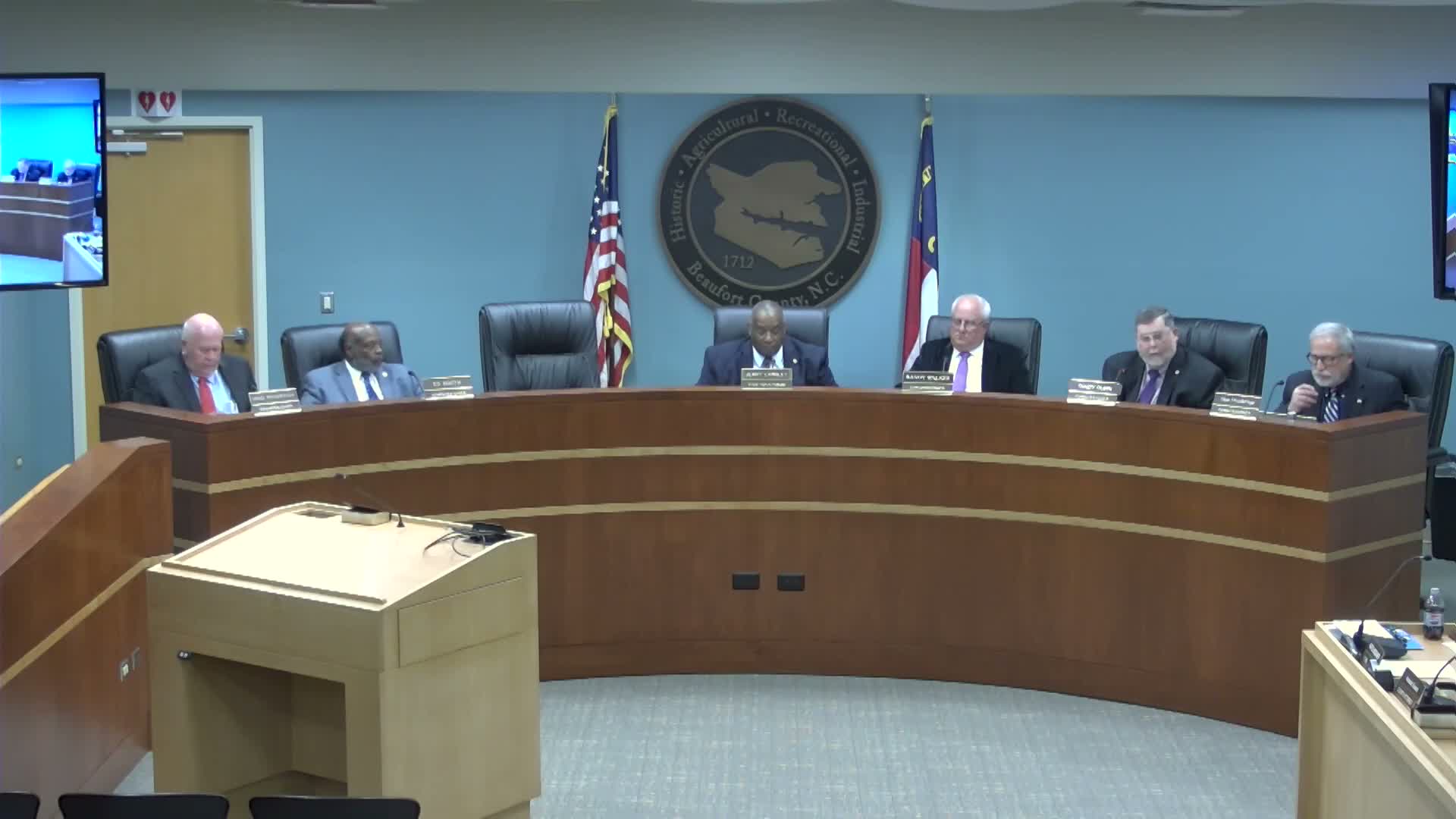
Summary
After debate over costs and administrative overhead, the board voted 4–2 to ask state legislators to propose local enabling legislation for a 6% occupancy tax, citing a study that estimated roughly $290,000 in county revenue.
The Beaufort County Board of Commissioners voted 4–2 to ask Senator Brinson and Representative Tidwell to sponsor enabling legislation for a local occupancy tax in Beaufort County. The proposed framework discussed by commissioners included a 6% tax on short-term lodging that would be paid by visitors.
Commissioner (speaker 8) introduced the motion, arguing an occupancy tax is levied on visitors rather than county residents and can fund tourism promotion and preservation projects. Commissioner Dennis cited a 2024 study by the Magellan Group that, he said, estimated roughly $290,000 in annual county revenue (excluding municipal collections) and described typical administrative fees and distribution rules that often allocate a portion of receipts to administrative costs and marketing.
Opponents raised concerns that the tax may yield limited net revenue after administrative costs, and questioned whether creating a new taxing authority is worthwhile without a study comparing projected receipts to operating costs and staffing. One commissioner recommended a prior study be provided showing projected collections and program costs before advancing legislation. Supporters countered that the tax would not fall on local residents but on nonresident visitors and that monies could replace some county budget allocations to tourism.
Vote and next steps: The motion to request that legislators propose a local occupancy tax carried on a recorded vote of 4–2. The board did not adopt specific ordinance language at the meeting; staff or sponsoring commissioners will follow up with legislators and may request further feasibility analysis or a formal study to quantify expected net revenues and administrative costs.