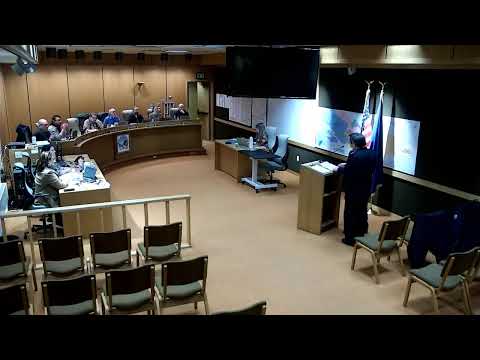
Kodiak Assembly advances Pacific cod and Chignik salmon disaster ordinances to public hearing
Loading...
Summary
The assembly moved two ordinances to public hearing that would appropriate $156,158.40 (2020 Pacific cod disaster) and $41,557.81 (2021 Chignik salmon disaster) into a fisheries economic development fund; both motions passed unanimously.
The Kodiak Island Borough Assembly voted to advance two ordinances to public hearing that would accept and appropriate federal fishery-disaster funds into the borough’s fisheries economic development fund.
Borough Manager Amy Williams said the borough received notice from the Pacific States Marine Fisheries Commission that the borough is eligible for a one-time payment of $156,158.40 for the 2020 Alaska Pacific cod federal fishery disaster and $41,557.81 for the 2021 Chignik salmon disaster. "When a federal fishery disaster is declared, direct federal financial assistance may be provided to fishing communities ..." Williams said, explaining that borough code requires adoption by ordinance and that the funds are placed in a fisheries economic development fund rather than the general fund.
Assembly Member Beau explained the intent to keep disaster payments targeted to fisheries support and provided examples of potential uses, including non-profit grants for marine safety training and other programs to support local harvesters. "This doesn't displace harvesters — harvesters and processors apply to their own pools — but placing funds in a fisheries economic development fund helps keep money aligned with fisheries needs," Beau said.
Assembly members discussed timing and uses; Assembly Member Jeremiah sought clarification about whether the funds could be distributed directly to fishermen. Beau and Manager Williams explained that federal disaster funds have separate application pools and that the borough's approach is to set money aside for future fisheries-related initiatives. Both ordinances (FY2026-13 and FY2026-14) were moved to public hearing and advanced to be heard at the assembly's December meeting.
Both motions to advance to public hearing passed by recorded vote (unanimous). Further detail on specific programs and grant guidelines will be considered when the ordinances reach public hearing.