Mat‑Su School District projects roughly $22 million shortfall; board outlines $3.2M local ask and potential cuts
Loading...
Summary
The Mat‑Su School District told a joint meeting of borough and school board officials that a preliminary budget projects about a $22 million gap for fiscal 2027 and identified a $3.2 million increase tied to the state's required local contribution; officials warned of program and transportation reductions if funding is not found.
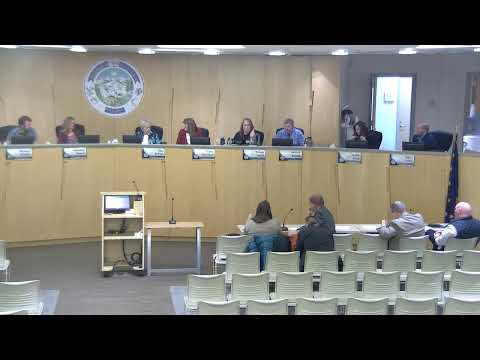
Kathy Cohen, president of the Mat‑Su School Board, and Katie Gardner, the district’s deputy superintendent for business and operations, told a joint session with the Matanuska‑Susitna Borough assembly on March 9 that the district’s preliminary budget projects a deficit of about $22,000,000 for fiscal year 2027.
"Our budget at this stage, at this preliminary stage, projects a deficit of about $22,000,000," Gardner said during a shortened presentation. She said the figure is a starting point based on known revenue assumptions and no assumed expenditure reductions.
Gardner and Superintendent Randy Trainee said the shortfall stems from two main pressures: rising personnel costs and reduced state revenue tied to enrollment declines and an increase in the state's required local contribution. Gardner said state funding is projected to fall by roughly $6,000,000, about half because of enrollment declines and half because the required local contribution increased. The district reported an adjusted average daily membership of about 35,224 students.
The district identified a targeted local funding figure — roughly $3,200,000 — tied to the increase in the required local contribution. "That 3,200,000 is roughly about 32 positions across the district," Gardner said, describing one way the sum could be understood in personnel terms.
Officials laid out areas that would face reductions without additional revenue, including further cuts to pupil transportation (the district cut 14 bus routes this year), possible consolidation or closure of small schools, and reductions to non‑personnel programs. Gardner said the district does not plan to use one‑time fund balance to sustain ongoing operations and emphasized the board will continue to evaluate revenue and expenditure options.
Assembly members and school board members pressed administrators on details. Assemblymember Mike Bowles asked whether the district has an excess of administrative positions and whether efficiencies could be gained by sharing services with the borough. Trainee and Gardner said the district uses published metrics for staffing, noted that school choice and correspondence programs create administrative costs, and cautioned that trimming choice programs could reduce options that have driven strong student outcomes.
Gardner said the district's unassigned fund balance as of June 30, 2025, was about $88,000,000, but that using one‑time reserves is not a preferred long‑term strategy for covering recurring costs. She outlined a scenario in which the borough increased its appropriation from about $78,000,000 to roughly $81,000,000 — covering the required local change — which would lower the projected shortfall to about $19,200,000 but would still leave significant gaps.
Officials said they intend to continue joint work with the borough to narrow options. Superintendent Trainee emphasized the district’s academic results: "When we look at how we're doing, I think we're producing the best product in Alaska right now on the lowest funding level of the big 5," he said.
Next steps: the board will refine a formal local funding request and the assembly and board’s joint subcommittee will continue analysis of cost and revenue options. No formal vote on a funding increase occurred at the meeting.