Kodiak assembly backs targeted destructive testing to diagnose community pool problems
Loading...
Summary
After an engineering assessment found widespread tile/membrane failure and saltwater-caused rebar corrosion, the assembly agreed informally to fund targeted destructive testing (a small demo area) to determine the extent of damage before deciding on a full replacement.
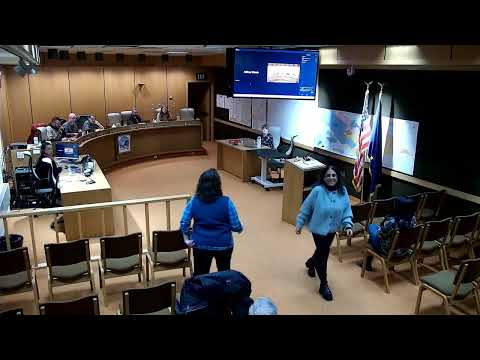
The Kodiak Island Borough Assembly on Dec. 16 directed staff to proceed with a limited “destructive testing” pilot to better understand the scope of corrosion and tile failure at the borough community pool, project manager Cody Allen said.
The test will demolish about 200 square feet in a lifeguard office area adjacent to mechanical spaces so engineers can inspect pan decking, rebar access and drain connections without draining the pool or closing the entire facility. “We have a larger issue; spot repairs would not be adequate,” Allen said while describing saltwater infiltration that has reached rebar and caused corrosion in pool walls and gutters.
An architectural and engineering assessment found the pool’s waterproof membrane (a MAPPA product) had failed in multiple areas, penny-tile grout has degraded and ductile-iron drains are corroding. Staff also reported noncompliant heat exchangers, aging HVAC components, and obsolete building controls that increase operational risk. The structural engineer did not identify an imminent collapse risk but warned deferred repairs will raise costs and complexity.
Staff laid out three paths: a small, investigative destructive test to validate the extent of hidden damage; a full wet-area replacement that would require long-term closure; or continuing with recurrent patch repairs. Council members repeatedly noted the risk that temporary fixes can prolong closure and argued for a measured approach. One representative warned that temporary closures often become long-term losses for the community.
Madam Manager said the pilot would allow the pool to remain open for most users during inspection and provide a clearer fiscal estimate for any comprehensive repair. The assembly expressed informal support for the targeted testing and asked staff to monitor state capital-bond opportunities that could offset a larger repair if needed. Staff will return with a project scope and fiscal note after the investigative work is completed.
The assembly did not adopt a formal ordinance or appropriation at the Dec. 16 work session; the testing authorization was given as direction to staff and will be formalized with project documents and budget proposals when costs are known.