Commission approves Title 17 amendments clarifying short‑term rental definitions, amends parking table language
Loading...
Summary
The commission approved zoning code changes to clarify short‑term rental definitions and require documentation of transient accommodation tax registration; commissioners also amended Table 1 to make parking requirements for homestays/vacation homes and vacation rentals both 'dependent on the number of units within the building.'
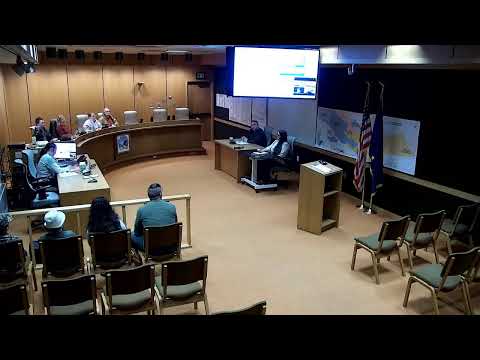
The Kodiak Island Borough Planning and Zoning Commission on Nov. 19 adopted revisions to Title 17 that clarify definitions and regulatory treatment of short‑term rental uses and require zoning compliance permits to document registration for the transient accommodation tax.
Staff told the commission the proposed amendments correct issues in the existing code, provide distinct short‑term rental use definitions consistent with current allowances, and give staff guidance to ensure compliance. Staff pointed commissioners to a detailed analysis in the staff report (pages noted in the packet) and to proposed findings included in the resolution (FY2026‑010).
Commission discussion focused on technical consistency in terminology and the off‑street parking table. Commissioners asked why homestay, vacation home and bed‑and‑breakfast uses were consolidated into one line rather than listed separately; staff said the organization followed existing code lines to minimize clerical changes but acknowledged the uses are related. Commissioners proposed an amendment to Table 1 (off‑street parking), and a motion passed to amend the parking table so that both the homestay/vacation home line and the vacation rental line include parentheses reading 'dependent on the number of units within the building.' The amendment passed by roll call, and the commission then approved the main motion as amended.
Staff noted the code changes will require applicants seeking short‑term rental zoning compliance permits to demonstrate transient accommodation tax registration as part of zoning review. The amendments were described as technical clarifications rather than substantive policy changes, with staff and several commissioners characterizing the changes as improving consistency and enforcement clarity.
The motion as amended (resolution FY2026‑010) was adopted; implementation will follow standard permit and code‑administration processes.