Get Full Government Meeting Transcripts, Videos, & Alerts Forever!
Get email alerts on the St Louis County 2050 topic
No spam. Unsubscribe anytime.
Planner outlines 'St. Louis County 2050' goals, policy buckets and near-term implementation steps
Summary
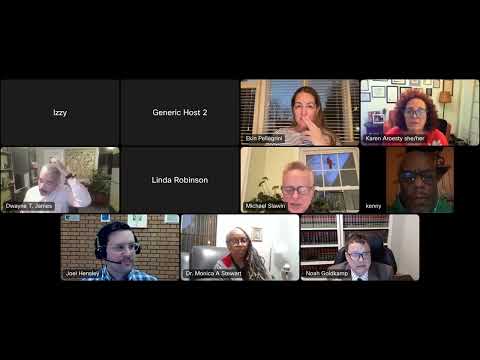
Joel Hensley, principal planner, presented the 'St. Louis County 2050' comprehensive plan to the Human Relations Commission, describing five priority outcomes, five policy 'buckets,' and near-term implementation actions including a zoning code update, a community outreach 'post-adoption roadshow,' and a Spanish Lake small-area study.
Joel Hensley, principal planner in the St. Louis County Planning Department, presented the county’s comprehensive plan, calling it “St. Louis County 2050, an equitable and sustainable comprehensive plan” and saying that equity and sustainability are woven into the roughly 200 policies the plan contains.
Hensley summarized five desired outcomes the plan targets: safe and thriving communities; fiscally responsible infrastructure; equitable growth and opportunity; housing options for all; and strong and healthy residents. He also identified five key issues the county must address—population stagnation, infrastructure cost burden, a job-skills mismatch (including a missing 'middle' of jobs), housing diversity and affordability, and social and environmental resilience—and used mapped overlays to show how these issues concentrate in particular places.
On infrastructure costs, Hensley cautioned that the county’s current road network imposes long-term maintenance burdens, saying in the presentation that an average home’s share of street maintenance revenue could take “over 100 years” to recoup under current conditions. He listed policy buckets that reframe traditional planning silos into integrated approaches (inclusive economies; complete communities/connected neighborhoods; sustainable infrastructure; responsible growth; and leading the region).
Hensley described implementation steps already underway: the county has held six implementation-orientation meetings with stakeholders, plans a zoning-ordinance update next year to modernize the code, will conduct a post-adoption outreach 'roadshow' to share plan elements with communities, and has initiated a Spanish Lake small-area study that has completed RFP and selection and is moving toward contracting.
Commissioners asked how the Human Relations Commission could support implementation. Hensley said he had pulled relevant policies for the commission in the slide deck and invited the commission to partner on implementation activities; he added that the plan is scheduled for a mandated five-year update and that the current plan can be revised over time.
Hensley offered to provide the slide deck as a PDF for distribution and answered follow-up logistics questions from commissioners.
Next steps: planning staff will share a PDF of the presentation with commission staff and follow up with commissioners on policy areas where the commission can partner during implementation.