Get Full Government Meeting Transcripts, Videos, & Alerts Forever!
Get email alerts on the Public Health Naloxone topic
No spam. Unsubscribe anytime.
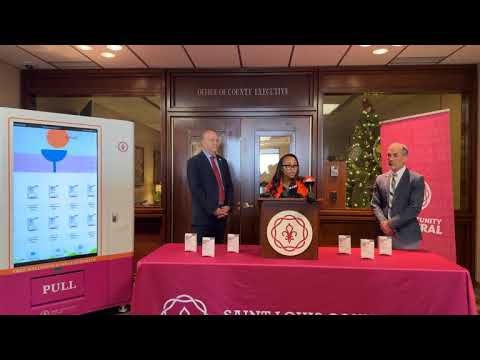
St. Louis County adds NARCAN vending machine, warns of rising carfentanyl deaths
Summary
County officials announced an additional NARCAN vending machine at county headquarters in Clayton, described an increase in carfentanyl-involved fatalities, and rolled out an overdose-spike alert system and expanded naloxone distribution funded in part by a CDC grant.
County officials announced a new NARCAN vending machine on the ground floor of the St. Louis County headquarters in Clayton and urged residents to carry naloxone as the community confronts a growing carfentanyl threat.
Doctor Cunningham, identified in the transcript as Director of Public Health, told reporters that carfentanyl is an "extremely potent opioid" and said the county has seen a troubling uptick in fatalities involving the substance. "So far in 2025, there have been 7 confirmed fatalities compared to just 1 in all of 2024," she said, and added that toxicology and surveillance work has detected carfentanyl in a share of tested street-drug samples.
Cunningham said carfentanyl can require more naloxone for reversal than fentanyl — "3 to 4 doses of naloxone for reversal compared to 1 to 2 doses for fentanyl" — which makes easy access to naloxone more important. She outlined multiple distribution channels the county is using: 27 naloxone vending machines already placed in high-traffic areas, mailed kits to residents, distribution through county libraries and health centers, and supply to individuals leaving jail. The county aims to expand to 41 vending machines.
The health department also announced a new overdose-spike alert system that will notify community partners, hospitals and law enforcement about sudden increases in suspected overdose visits among county residents. "The goal is to provide timely, actionable information to partners who may benefit from these alerts," Cunningham said.
Officials described additional items stocked alongside naloxone in the vending machines, including hygiene kits, wound-care supplies and condoms to reduce immediate harms for people who inject drugs and to avert complications that can lead to hospitalizations.
Cunningham said the department received a CDC grant "of $2,600,000" to help support the vending machines and related outreach. Doctor Page emphasized the county’s intent to normalize carrying naloxone, saying, "Carrying NARCAN will save a life."
The health department offered to provide media a map of current vending-machine locations and a QR code demonstration of how the machines operate. Cunningham also urged residents to be aware of changes in the drug supply and to seek vaccination and care for seasonal illnesses when appropriate.
The county said it will continue to mail naloxone and expand distribution through its health centers and public-facing venues; officials encouraged residents to carry naloxone and to sign up local organizations for overdose alerts.