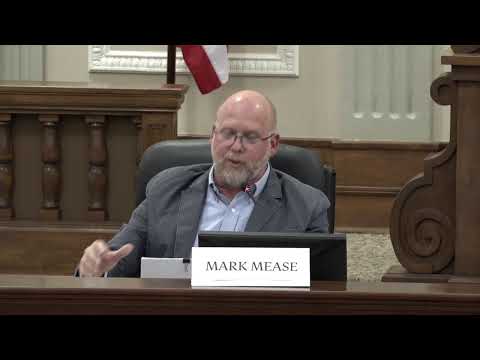
Candidates outline approaches to drugs, staffing and jail treatment at Haywood County forum
Loading...
Summary
Incumbent Bill Wilkie and challengers Mark Meese and Tyler Howell discussed drug enforcement, staffing and jail-based recovery programs; all three endorsed medically assisted treatment and emphasized career-track training and community relationships to improve outcomes.
Waynesville — At a Smoky Mountain News forum, the three candidates for Haywood County sheriff described overlapping and competing strategies to address drug-related crime, staffing shortages and in-jail recovery services.
Drug enforcement: Wilkie emphasized targeting major traffickers and credited technological tools and a crime-suppression unit with a steep rise in seizures. He argued that removing large suppliers reduces downstream street-level availability. Meese and Howell said enforcement must include community-level suppression and close partnerships with regional task forces such as DEA and state task forces to gather intelligence across jurisdictional lines.
Staffing and culture: All candidates said morale and leadership matter more than pay alone, though they acknowledged salary benchmarks affect retention. Wilkie pointed to a stabilized roster with three current vacancies; Howell and Meese urged establishing a career-track program that links training, promotion and pay increases to retain deputies and develop future leaders.
Jail treatment and MAT: Candidates voiced support for medically assisted treatment (MAT) in the detention center and for complementary services. Meese called MAT 'proven' and highlighted the need for psychological help, peer support and life-skills training. Wilkie said MAT decisions should be made by physicians, praised reintegration programs and noted partnerships with Health and Human Services. Wilkie also cited Americans with Disabilities Act requirements when discussing MAT access.
Operational and budget details mentioned: Wilkie said replacing expired soft body armor cost about $70,000; he also said the office added eight school-resource-officer positions so that each school has an SRO and that the office has three current vacancies. Wilkie and others cited large increases in drug seizures (described in the forum as roughly tenfold since earlier unit configurations) but gave differing numerical examples.
The candidates did not propose immediate budget votes at the forum; their statements focused on policy priorities and managerial changes that an incoming or continuing sheriff would pursue.
Next steps: Candidates and voters head into the primary election cycle; forum statements set contrasting expectations about transparency, interagency cooperation and whether emphasis should be on technological suppression or community-based prevention and treatment.