
La Vergne workshop orders staff to draft food-truck ordinance after extended debate
Get AI-powered insights, summaries, and transcripts
Subscribe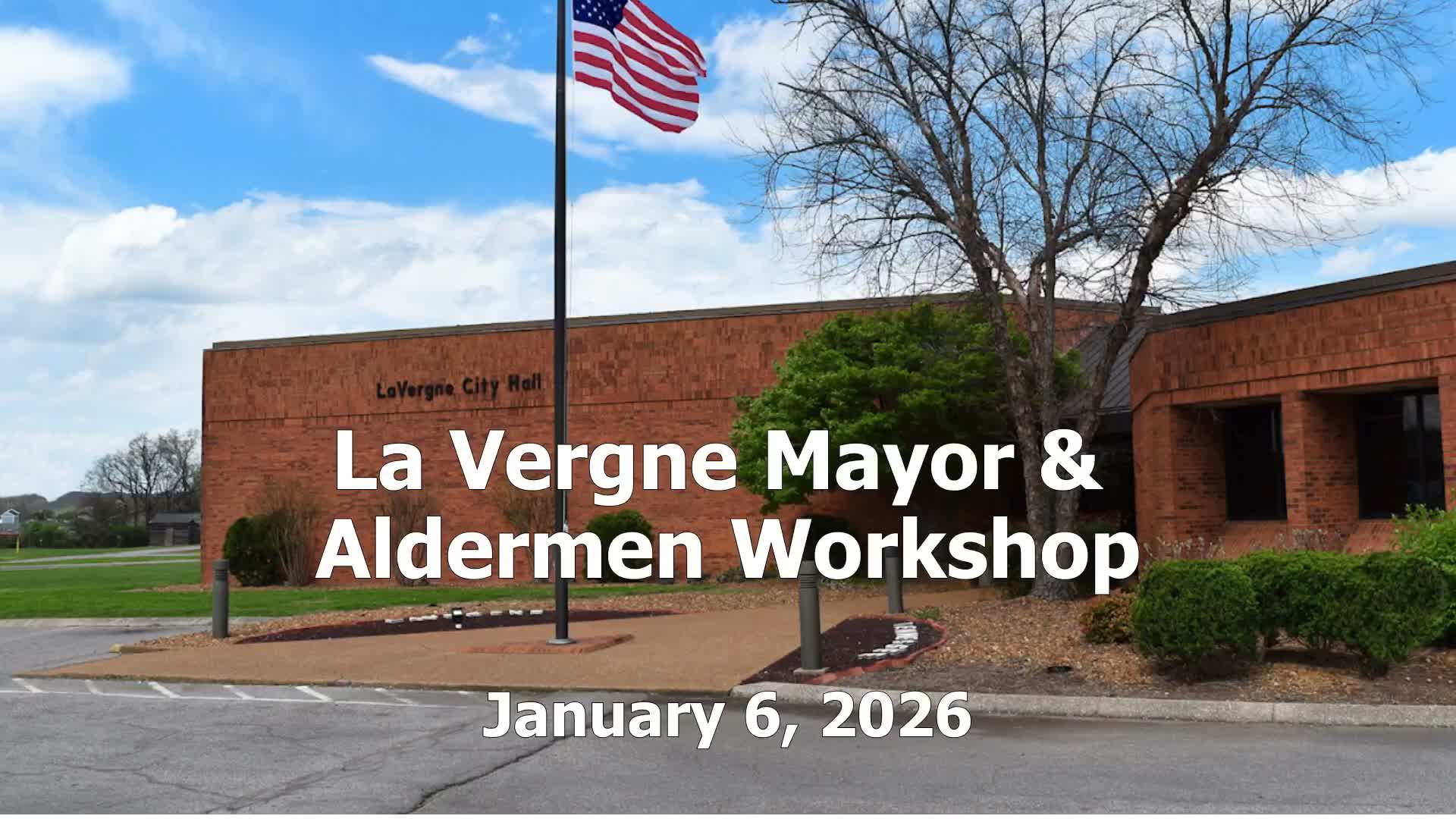
Summary
At a Jan. 6 workshop, the La Vergne Board of Mayor and Aldermen debated restricting food trucks from overlay and commercial districts, discussed enforcement and tax concerns, and directed staff to draft ordinance language for the February meeting.
La Vergne held an extended workshop discussion on Thursday about whether and how to regulate food trucks in commercial and overlay districts, with officials and staff weighing economic-development goals, public-health enforcement and First Amendment limits.
Vice Mayor Ngo opened the discussion by saying the city must decide whether to “kick this thing down the road” or make a firm choice on hours, locations and other limits. Tom, who conducts site tours for prospective businesses, told the board food trucks can “deter” brick-and-mortar investment and questioned whether trucks that operate long-term in commercial corridors align with the city’s goals. “If you’re gonna ask me which one is where we need to be moving forward… I’m gonna go every day with getting it out of the commercial areas,” Tom said.
City staff and department leaders outlined options and constraints. Kyle and Beau described models used by nearby towns — allowing mobile vendors for special events or restricting permanent placement — and Beau recommended an exclusion for large construction sites that need temporary worker food service. City attorney Evan cautioned the board it cannot enact a de facto ban by creating rules so burdensome that operation is impossible, invoking First Amendment and business-practice limits.
Staff described the current permitting regime: mobile vendors must provide a health department inspection or permit and show business licensing; permits are reviewed annually and can be inspected more frequently. Board members raised concerns about enforcement and tax collection for vendors registered in neighboring jurisdictions.
After discussion of multiple regulatory approaches — limiting food trucks to industrial areas outside overlay districts, banning placement on unimproved lots, requiring vendors to leave at the end of the day, and permitting only city-sponsored events — the mayor asked city staff to draft ordinance language. Bruce and Evan were asked to prepare a proposed ordinance to return to the board in February that would restrict food trucks in overlay/commercial areas while providing defined carve-outs (for construction sites and permitted city events).
The board did not vote on a final ordinance at the workshop; the conversation served as direction to staff. The next step is a departmental meeting among economic development, planning, engineering, codes and police to shape a draft for the board’s consideration.