
Concord auditors give overall clean FY2025 opinion but flag housing voucher and water/sewer issues
Get AI-powered insights, summaries, and transcripts
Subscribe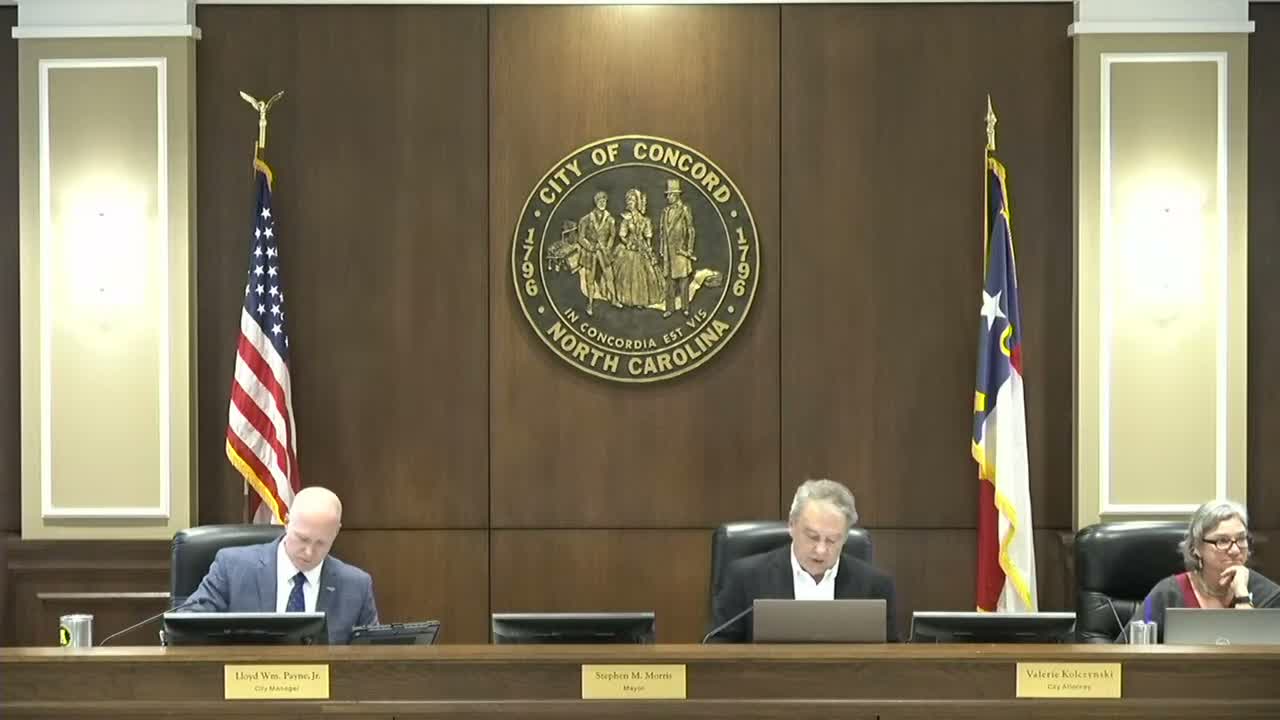
Summary
Martin Starnes and Associates presented Concord's FY2025 audit: a clean opinion on most funds but a qualified opinion for the Housing Choice Voucher program, a negative water-and-sewer operating net income that requires a Local Government Commission response within 60 days, and an available general fund balance of 50.8%.
The Concord City Council received the city's independent audit for the fiscal year ending June 30, 2025, which showed generally positive fiscal health while identifying several compliance issues that the city must address.
Bao Tao of Martin Starnes and Associates told the council the firm '2 issue an unmodified opinion on the financial statements and in all federal and state programs, except for the Housing Choice Voucher program, which is qualified.'2 The audit presentation noted a new GASB 101 implementation (compensated absences) and significant year-over-year revenue growth tied primarily to property-value increases.
The report showed the city's available general fund balance at 50.8% (the Local Government Commission minimum for units with general fund expenditures above $10,000,000 is 25%). Total general fund revenue was reported as $164,800,000, with the top three revenue sources comprising about $140,300,000 (approximately 85% of total). Revenues increased by about $29,000,000 (21.9%), driven largely by added value in property taxes; expenditures rose roughly $8,000,000 (6.1%), mainly for public safety.
Audit findings included material weaknesses and material noncompliance in programs tied to housing assistance. The auditor identified failures in documented eligibility determinations and in enforcement of housing quality standards and reinspections for the Housing Choice Voucher program. The report also flagged material weaknesses and noncompliance for the public housing operating fund related to eligibility determination documentation.
The audit noted a performance indicator for the combined water and sewer operating net income (excluding depreciation and including debt service) of negative $1,100,000; auditors said the Local Government Commission typically takes interest in negative net income and that the city must file a response to the LGC within 60 days of the auditors' board presentation.
Kristen, the city's deputy finance director, confirmed the city will prepare and submit the required LGC response and pointed council members to the full annual comprehensive financial report on the city website, which includes the detailed findings and the action plan the finance team has prepared to address them.
Council members asked clarifying questions about specific compliance lines, separate federal transit cluster listings and the causes of increased expenditures. The audit team said increases in public safety and capital outlays explained most expenditure growth. The auditor closed by reiterating readiness to continue as the city's auditors and to support the city's corrective actions.
What happens next: staff will submit the LGC response within the required timeframe and pursue the action plan included in the back of the comprehensive annual financial report; council will consider the auditor's presentation and any formal acceptance at the regular council meeting Thursday.