
Fort Lauderdale delays new commercial golf‑cart rules after operators warn proposed insurance levels would shut out small businesses
Get AI-powered insights, summaries, and transcripts
Subscribe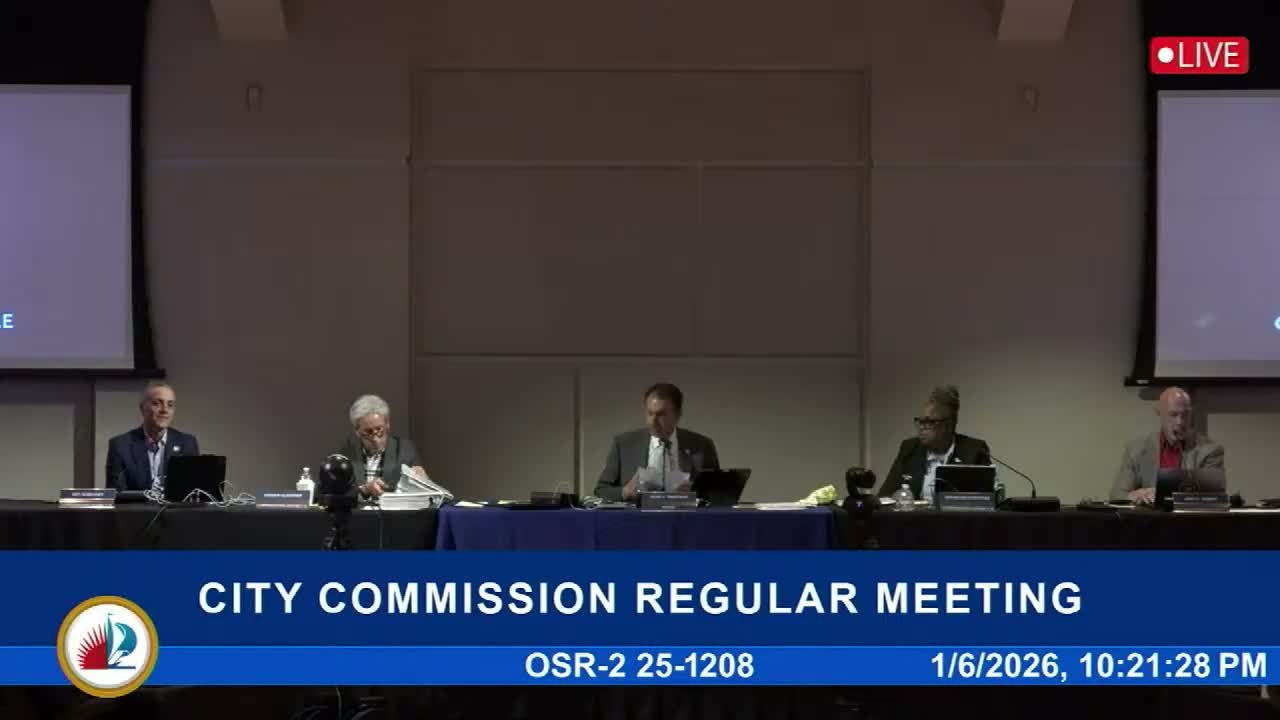
Summary
After operators testified an insurer‑recommended $1 million commercial liability threshold would be unaffordable, the commission deferred consideration of a new low‑speed vehicle/code ordinance to March 3 to allow additional stakeholder meetings and enforcement planning.
The commission on Jan. 6 deferred a proposed ordinance that would create a new administrative permitting and fee framework for commercial low‑speed vehicle operations (commonly called commercial golf carts). City staff and risk management proposed strengthening insurance minimums in response to safety concerns; risk management recommended higher limits (discussed by staff as $1,000,000 general liability), citing past incidents and potential exposure.
Multiple local operators and small business owners testified the proposed insurance and fee levels would be unaffordable and would force many local companies out of business. Operators said commercial insurance costs would increase dramatically versus private vehicle coverage and that some rely on advertising revenue and modest fares to operate. Small operators asked staff to consider a scaled or pooled/umbrella insurance approach, and urged the city to prioritize enforcement against unpermitted, out‑of‑state operators who flood event days.
Commissioners asked staff to hold further stakeholder meetings to refine permit fees, evidence of insurance options (including potential umbrella policies), enhanced enforcement tools (fines, revocation, seizure/booting options) and stronger mechanisms to target unpermitted operators. The commission voted to defer OSR2 to the first meeting in March to allow staff time to meet operators, adjust the proposal and return with a date‑certain draft.