
Martin County presenters outline long-term plan to expand K–8 schools, magnets and specialized academies
Get AI-powered insights, summaries, and transcripts
Subscribe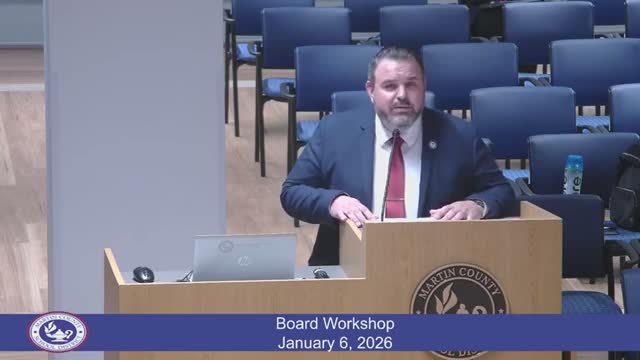
Summary
Executive director Daniel Moore asked the board to endorse a long-term direction to expand K–8 configurations, embed magnet pathways and explore standalone specialized academies, and requested permission to conduct market research and return next month with enrollment and cost analyses.
Daniel Moore, the district’s executive director of curriculum and instruction, presented a long-term vision to the Martin County School Board workshop on expanding K–8 configurations, embedding magnet pathways in existing schools and developing standalone specialized academies. “What I’m presenting is not a plan for immediate change,” Moore said, framing the proposal as a direction to help the district retain students amid competition from charter and virtual providers.
Moore argued K–8 models and magnet pathways can reduce transition disruptions, strengthen community ties and improve outcomes. He cited Florida accountability data saying combination schools and K–8s have higher proportions of A and B ratings than stand‑alone elementary or middle schools. “If we wanna remain the first choice for families in Martin County, we have to evolve,” he said.
The proposal has three pillars: targeted K–8 conversions in candidate schools, rapid rollout of magnet pathways (performing arts, STEM, accelerated studies, career preparation) inside existing sites, and a longer-term program of standalone specialized academies such as classical, technical or early‑college high schools. Moore stressed the district would not pick specific schools tonight and asked the board for permission to proceed with market research, family surveys and school site committees to define demand and logistics.
Board members asked for financial and operational detail. Doctor Moriarty asked whether the plan contemplates converting a few schools or the entire district and urged the administration to present budget estimates; Moore said cost and placement recommendations would be delivered next month. Mrs. Roberts said the district’s CFO is compiling migration data that will show where students are leaving and asked that those numbers be included in the enrollment analysis.
Members also pressed for evidence on why K–8s may outperform stand‑alone schools; Moore said national research is inconclusive and that Florida’s accountability model can make K–8 grading more favorable, but offered to run district‑level modeling to show what school grades would look like under a K–8 configuration.
Moore offered additional options — year‑round school calendars and flex school models — and said the team could prepare analyses of those approaches. He said that with the board’s blessing staff would return in February with enrollment analysis, facility impacts, cost implications and community feedback. The board did not take formal action at the workshop; staff will bring more detailed proposals and financial information to future meetings.