
Board debates committee structure and social‑media rules, sends committee policy back for review
Get AI-powered insights, summaries, and transcripts
Subscribe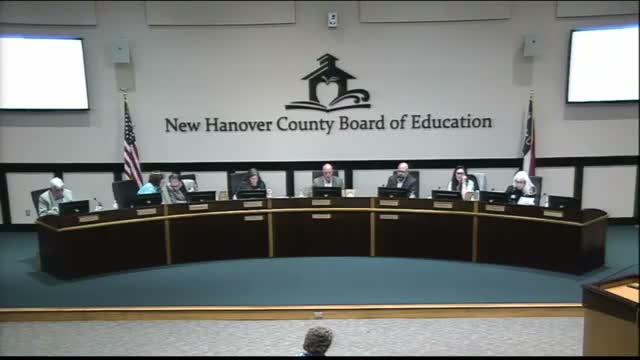
Summary
Board members sparred over a proposed employee‑retention standing committee and a new social‑media restriction on use of school names/logos; the board voted to send committee policy (22‑30) back to policy committee for revision and to revert the proposed social‑media language in policy 2127.
The board spent a substantial portion of the meeting on governance and ethics policy updates, including a proposed standing committee on employee retention and new restrictions on the use of school names and logos on board members’ personal social media.
Board member David Perry proposed adding a standing employee‑retention and rewards committee to ‘‘develop new and creative employee benefit programs that will aid NHCS in recruiting, developing, and retaining the highest quality employees.’’ Several members objected to the timing and process of introducing the amendment directly on the dais; others said the idea deserves committee review rather than an immediate vote.
On social media rules, attorney and board discussion clarified that additional language from the North Carolina School Boards Association (NCSBA) was not legally required but was recommended. Britney LaRue, a member of the public, urged the board to adopt tighter rules to avoid confusion between personal posts and official statements: “When an elected official speaks publicly about matters under their authority, their words do not lose weight simply because they were posted from a personal account,” she said.
After debate over enforceability and privacy on personal pages, the board voted to send policy 22‑30 (board committees) back to policy committee for further work on the proposed language and to revert the newly proposed additions to policy 2127 (the social‑media language) and return to the prior version of section 3. The referral to policy committee was recorded as a 6‑1 vote.
Board members asked staff to return with suggested edits that clarify committee roles, partisan balance and minimum membership sizes, and to coordinate overlapping committee scopes (for example sustainability vs. soil and water committees) before the next committee meeting.