Planning commission outlines options to meet new state stream-buffer rules
January 08, 2026 | City Council Meetings, Newcastle, King County, Washington
This article was created by AI summarizing key points discussed. AI makes mistakes, so for full details and context, please refer to the video of the full meeting. Please report any errors so we can fix them. Report an error »
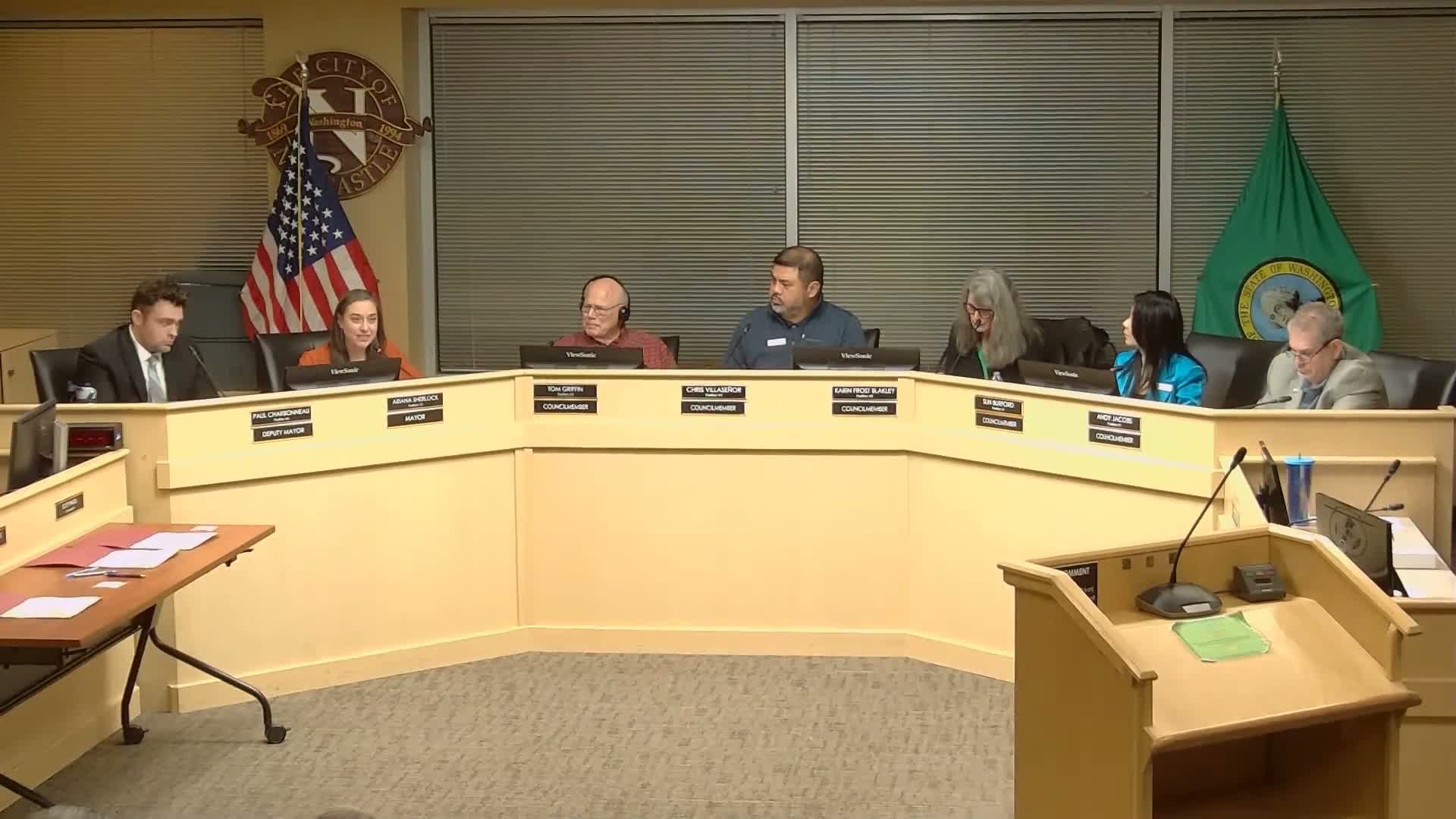
Planning Commission chair Charlie Gatsik told the council that state agencies now recommend wider buffers—up to 250 feet for fish-bearing streams and a minimum of 110 feet (including a 10-foot maintenance setback) for other streams—because urban impervious surfaces increase pollution risk. He said the city’s current buffers were originally adapted from forested-area studies and are not fully aligned with recent science for urban watersheds.
To balance environmental protection with homeowner impacts, the commission’s emerging recommendation would allow existing structures damaged or destroyed by fire or natural disaster to be rebuilt within their existing footprint regardless of buffer location. Homeowners would retain the option to expand upward without restriction and could expand outward up to 500 square feet provided the expansion occurs in areas defined as already disturbed (for example, lawns, driveways or other impervious surfaces), the commission said. Chair Gatsik also noted the commission and staff mailed more than 500 notices to potentially affected residents and engaged a consultant that worked with other cities facing the same statewide change.
Deputy mayor Charbonneau and Council member Frost Blakely asked for clarity on what constitutes an "already disturbed" area; Director Fitzgibbons said the municipal code defines disturbed areas (lawns, gravel and paved areas) and noted mitigation tools such as buffer averaging or other offset measures may be available, but the Department of Fish and Wildlife has emphasized maintaining larger buffer distances to protect stream habitat.
The commission plans a public hearing in late January; if the commission approves a recommendation, the council expects to consider it at its second February meeting. Chair Gatsik said there is urgency: if the city’s critical areas ordinance does not comply with state law, Newcastle could be ineligible for some state grants.
Don't Miss a Word: See the Full Meeting!
Go beyond summaries. Unlock every video, transcript, and key insight with a Founder Membership.
30-day money-back guarantee
Sponsors
Proudly supported by sponsors who keep Washington articles free in 2026

